



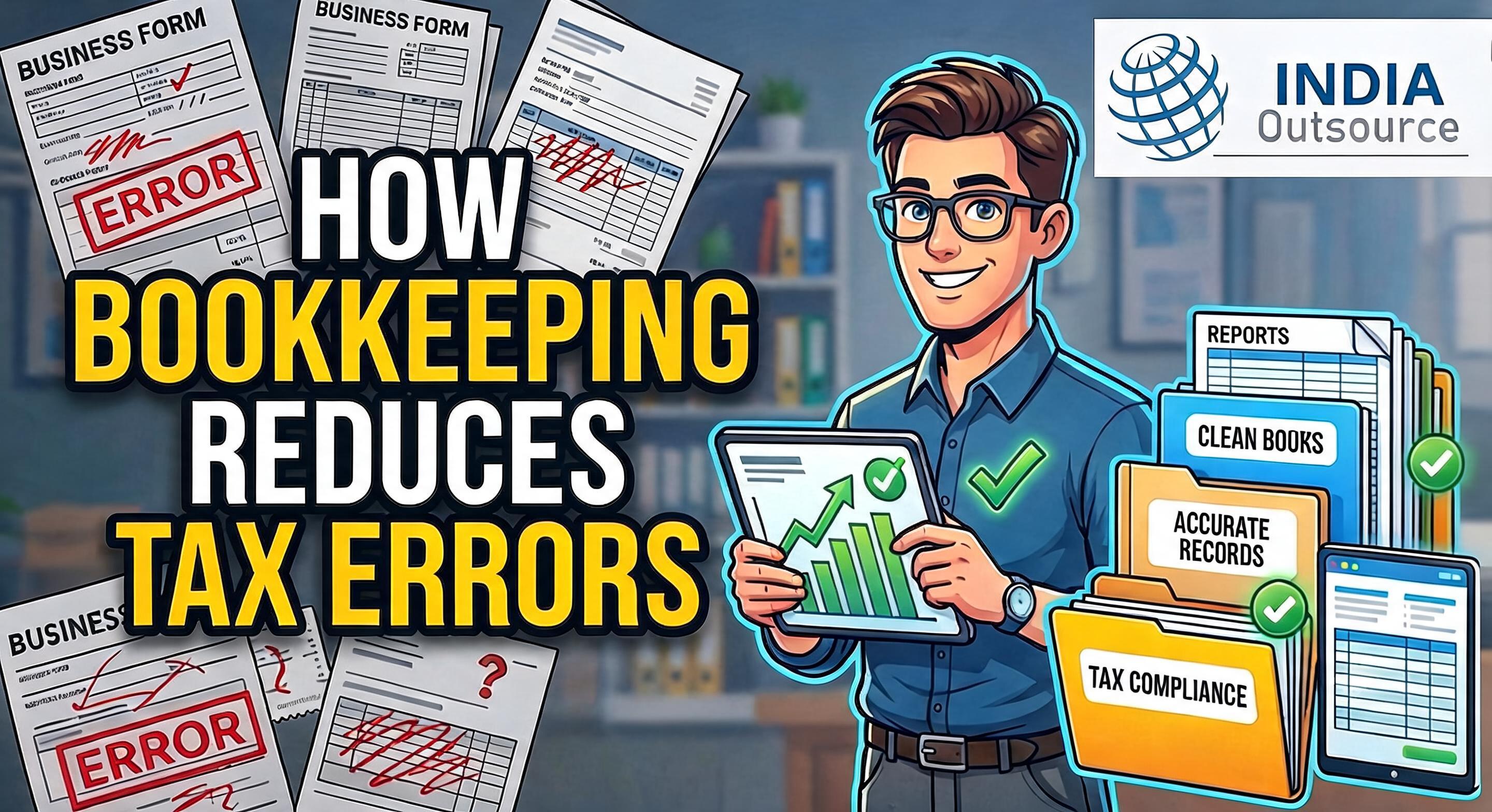
Reduce Costly Tax Mistakes with Professional Bookkeeping Services
Tax season is one of the stressful periods for business owners. From a small start-up to an eCommerce business, a growing enterprise or even a freelance business, no matter how small the tax error may seem, it can result in penalties, audits, deduction losses and losses in your finances. In today’s ever-changing tax landscape, accurate accounting is no longer an option, it’s a necessity. Bookkeeping Services.
This is where professional bookkeeping services comes into handy. Bookkeeping is the cornerstone of sound financial reporting and tax filing. The services ensure that businesses have their financial records in order, up-to-date, and free from errors throughout the year, which minimizes the risk of tax errors and optimizes deductions and compliance with tax laws.
In this comprehensive guide, we will explain how bookkeeping service helps you minimize tax mistakes, why good bookkeeping is important and how professional bookkeeping can save your business time and money.
What Are Bookkeeping Services?
Bookkeeping services involve the systematic recording, organizing, and management of a company’s financial transactions. Professional bookkeepers keep in mind all financial transactions such as:
- Income and revenue
- Business expenses
- Payroll records
- Accounts payable
- Accounts receivable
- Bank reconciliations
- Tax-related transactions
- Financial reporting
Bookkeeping is essentially about keeping good records and staying current with them to create an accurate picture of a business’s financial health.
Without proper bookkeeping some businesses end up having a lot of trouble, such as having a very incomplete record system, inaccurate financial reports issued to their external parties and various tax issues because there is no documentation for them.
Why Tax Errors Are More Common Than Most Business Owners Realize
Many business owners think that only incorrect information is required for the tax mistake they make. But most of the tax errors occur because of inadequate record-keeping.
Common tax errors include:
- Misreporting income
- Claiming incorrect deductions
- Missing eligible tax deductions
- Incorrect payroll tax calculations
- Duplicate expense entries
- Mathematical mistakes
- Misclassifying employees and contractors
- Filing incomplete tax returns
- Missing tax deadlines
- Failing to reconcile bank accounts
Any error can cost you tax audits, fines, interest penalties, or a late tax refund.
Professional bookkeeping services can reduce these dangers by keeping financial information accurate all year long.
How Bookkeeping Services Help Reduce Tax Errors
- Maintaining Accurate Financial Records
The major reason for tax mistakes is financial information that is incorrect. Bookkeeping services ensure that each and every transaction is rightfully noted and appropriately sorted.
All financial information is easily accessible and in order when tax season comes.
Benefits include:
- Accurate reporting of income
- Proper expense tracking
- Reliable financial statements
- Reduced risk of missing transactions
- Easier tax preparation
Keeping records accurately is the basis to tax returns that are error-free.
- Proper Categorization of Business Expenses
Expense categorization is an important part of tax reporting.
Many businesses accidentally:
- Misclassify expenses
- Overlook deductible costs
- Record personal expenses as business expenses
- Double-count deductions
Professional bookkeepers classify expenses appropriately based on accounting principles and taxes guidelines.
Examples include:
- Office supplies
- Travel expenses
- Marketing costs
- Equipment purchases
- Professional services
- Vehicle expenses
Proper classification prevents the risk of compliance problems and allows businesses to receive the right deductions.
- Reducing Human Errors in Financial Data Entry
Manual accounting methods lead to greater risk of error.
Common mistakes include:
- Typographical errors
- Duplicate entries
- Missing invoices
- Incorrect calculations
- Transposed numbers
Bookkeeping professionals utilize software and verification procedure to reduce these risks.
Regular reviews and reconciliations can identify discrepancies earlier than they produce consequences in tax filings.
- Ensuring Timely Bank Reconciliation
Bank reconciliation is a process that is used to verify the financial records with the bank statement.
Without regular reconciliation, businesses may overlook:
- Unrecorded transactions
- Duplicate payments
- Banking errors
- Missing deposits
- Fraudulent activities
Bookkeeping services perform frequent reconciliations to make sure records are accurate.
This is a process that greatly minimizes the tax reporting errors as financial statements are representative of actual business activities.
- Improving Tax Deduction Accuracy
Many businesses either:
- Miss valuable deductions, or
- Claim deductions they are not entitled to receive
In either case, tax issues can arise.
Professional bookkeeping makes it more likely that all expenses that are due will be adequately recorded and backed by documentation.
Examples of deductible costs could include:
- Office rent
- Utilities
- Business insurance
- Software subscriptions
- Employee benefits
- Advertising expenses
- Professional fees
Good bookkeeping not only keeps you compliant with the tax laws but also ensures that you are able to save more on taxes.
- Keeping Financial Records Audit-Ready
Tax audits can happen at any time.
Where records are incomplete, or not organized, audits can become much more stressful and costly.
Professional bookkeeping services maintain:
- Organized financial statements
- Expense receipts
- Payroll records
- Vendor invoices
- Tax documentation
An audit-ready system gives proof for tax filing and lessen the chances of penalties.
- Managing Payroll Tax Compliance
One of the most frequent errors that businesses make is with their payroll taxes.
Errors often involve:
- Incorrect employee classifications
- Miscalculated tax withholdings
- Missed payroll tax deadlines
- Inaccurate payroll records
Bookkeeping services ensure payroll is accurate by managing wages, benefits, deductions and tax requirements.
This helps minimize the chances of payroll tax penalties.
- Supporting Accurate Financial Reporting
Financial reports are critical for tax returns.
Some of the key reports that bookkeeping services produce are:
Profit and Loss Statements
The reports provide the summary of the business revenues and expenditures.
Balance Sheets
They illustrate assets, liabilities and equity.
Cash Flow Statements
These reports are used to monitor cash inflows and outflows.
If the reports are accurate, then the tax filings are accurate as well.
- Monitoring Tax Law Compliance
Tax regulations frequently change.
It’s common for business owners to have difficulties in meeting changing needs.
Professional bookkeeping services keep up to the date on:
- Tax reporting standards
- Documentation requirements
- Filing procedures
- Deduction eligibility rules
This proactive strategy can help businesses stay compliant and prevent them from making expensive errors.
- Preventing Missed Tax Deadlines
Late tax filings frequently come with penalties and interest fees.
Bookkeepers help businesses stay organized by tracking:
- Tax due dates
- Quarterly estimated tax payments
- Payroll tax deadlines
- Sales tax obligations
Proper record keeping helps in timely filing of tax returns with greater efficiency.
Financial Benefits of Reducing Tax Errors
The benefits of bookkeeping services are significant.
Lower Penalties
Accurate records reduce the risk of fines and penalties associated with incorrect tax filings.
Reduced Audit Risk
Keeping good financial records reduces the risk of fire alarms going off at audits.
Increased Tax Savings
Expenses can be tracked properly, and this will help identify all the allowable deductions.
Better Cash Flow Management
Financial data, if accurate, enables business owners to make informed financial decisions.
Time Savings
Bookkeeping experts take care of bookkeeping, permitting companies to focus on development.
Industries That Benefit Most from Professional Bookkeeping Services
Bookkeeping support can be used in virtually any business including:
- Small businesses
- Startups
- eCommerce companies
- Contractors
- Construction firms
- Healthcare practices
- Real estate businesses
- Law firms
- Marketing agencies
- Consultants
- Freelancers
- Nonprofit organizations
Bookkeeping is responsible for reducing risks for any organization that pays taxes.
Signs Your Business Needs Professional Bookkeeping Services
Bookkeeping Services can be required when:
- Each year tax season is overwhelming.
- Financial records are not organised.
- Receipts and/or invoices are often lost.
- Errors are common when processing payroll.
- Bank accounts are NOT reconciled on a monthly basis.
- You are unsure about deductible expenses.
- Excessive time is taken for tax filing.
- You are getting notices from or penalties from the IRS.
These issues can be overcome with professional bookkeeping before they turn into bigger financial problems.
Choosing the Right Bookkeeping Service
Look for a bookkeeping provider that:
Experience
Look for professionals who have industry-specific experience.
Technology
Pick providers that are using the latest accounting software.
Accuracy
Inquire about quality control.
Compliance Knowledge
Make sure they are aware of the tax laws in effect.
Reporting Capabilities
Regular financial reports offer insightful business information.
Scalability
Choose a service that will scale with your business.
The Long-Term Value of Professional Bookkeeping
Bookkeeping is less about paperwork and more about making sound investments in financial accuracy and business success.
Companies with good record keeping have the advantages of:
- Better financial visibility
- Reduced tax errors
- Stronger compliance
- Improved profitability
- Enhanced decision-making
- Greater confidence during tax season
The fees charged by professionals for bookkeeping services are far less than the financial mishaps, penalties for not filing taxes, and missed deductions.
Conclusion
Errors in taxes can be expensive, stressful and harmful to a business’s finances. Poor record-keeping poses a number of tax risks, such as incorrect expense reporting, unclaimed deductions, payroll errors, and compliance problems.
Professional bookkeeping services offer a dependable answer by keeping up precise financial records, organizing exchanges, guaranteeing adherence, and upholding exact taxation reports. Investing in expert bookkeeping can help businesses decrease tax mistakes, evade penalties, get the most out of deductions, and have additional self-confidence in their financial processes.
With the tax code ever changing and complex, the best thing any business can do is invest in a bookkeeping system that’s accurate.
Ready to Eliminate Tax Errors and Simplify Your Finances?
Contact Us Today
FAQs
1. How do bookkeeping services help reduce tax errors?
Bookkeeping services ensure proper bookkeeping or management of the financial documents, keep track of expenses, reconcile the accounts and prepare paperwork for tax. This can help minimize tax filing errors and guarantee adherence to tax laws.
2. Why is accurate bookkeeping important for tax preparation?
Bookkeeping is essential for the proper maintenance of accurate financial records to be submitted for taxes. It facilitates businesses to report income properly, claim allowable deductions, and prevent penalties due to incorrect records.
3. Can bookkeeping services help prevent tax audits?
While no service can promise that they will never be audited, a professional bookkeeping service will minimize the possibility by ensuring that you maintain accurate, organized, and compliant financial records that will support tax filing.
4. What tax mistakes can professional bookkeeping prevent?
Common tax pitfalls that can be avoided with bookkeeping services include improperly categorizing expenses, not reporting income, claiming the same deductions multiple times, filing payroll taxes incorrectly, and missing filing deadlines.
5. Do bookkeeping services help maximize tax deductions?
Yes. Accurate bookkeeping by the professional bookkeepers helps businesses claim deductions that are eligible and helps them avoid falling foul of the tax laws.
6. How often should bookkeeping be updated for tax accuracy?
Bookkeeping should be done regularly, preferably every week or month. Accurate financial records help keep money accurate and ready for tax time.
7. Can small businesses benefit from bookkeeping services?
Absolutely. Small businesses often face limited resources and complex tax requirements. Bookkeeping services help maintain financial accuracy, reduce tax errors, and improve overall financial management.
8. What is the difference between bookkeeping and tax preparation?
Bookkeeping is the process of documenting and organizing a business’ financial transactions on a continuous basis. It is also about creating records that can later be used for tax preparation and filing.
9. How does bookkeeping improve tax compliance?
Bookkeeping allows a business to ensure that its financial records are up to date and compliant with local, state and federal law, support accurate financial reports, track tax obligations, and assist the business in complying with current tax laws.
10. Are bookkeeping services worth the investment?
Yes, a business can benefit from the value of hiring a qualified bookkeeper in that hiring one can lead to savings in tax penalties, avoid excess costs, provide better visibility into the financial position of the business, and identify potential tax deductions.