



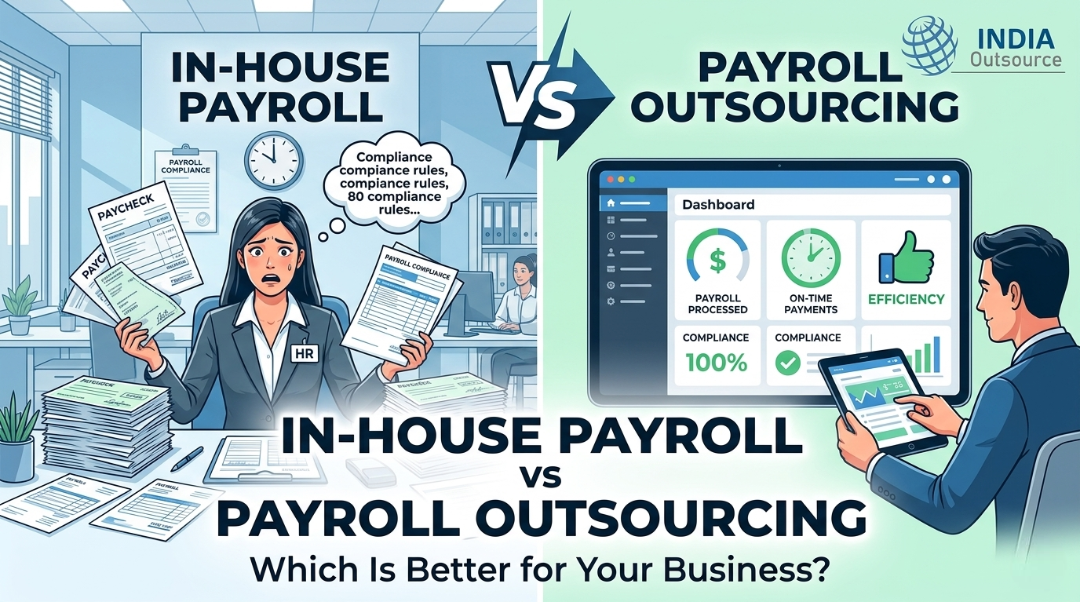
The Payroll Decision That Can Make or Break Business Efficiency
Payroll is more than just getting your staff paid on time. It is one of the foundational business activities that affect compliance, accuracy of taxes paid, employee morale, how effectively the organization exists, and management of finances. Whether you are a startup, small business (SMB) or large corporation payroll management decisions will greatly affect the success of your organization. In-House Payroll vs Payroll Outsourcing.
The biggest decision will be if you want to perform your own payroll management internally or use a third party provider for payroll services. There are benefits and drawbacks to both methods of performing payroll management, and which type of provider will best help your company achieve its goals will depend on several criteria, including: size of your company; budget; compliance requirements; future growth needs; and available company personnel resources.
Due to the increased amount of federal and state regulations affecting payroll management in today’s marketplace; payroll errors can lead to costly penalties, compliance violations large amounts criminal & civil liability and damage to company reputation, therefore being educated and aware of the differences between in-house payroll management and Payroll Outsourcing management will help you to make a knowledgeable decision as to the option that you will utilize to process payroll.
In this comprehensive guide cover a full range of information including: comparison of in-house payroll vs. outsourcing, benefits and drawbacks of both; costing of both; compliance issues; as well as which payroll processing service will be better for your business.
What Is In-House Payroll?
In-house payroll involves handling employee payroll internally, with your own employees, payroll software, and resources. In-house payroll businesses need to process payroll, withhold taxes, administer benefits, report payroll taxes, keep records and ensure compliance with labor regulations.
The payroll usually goes to the HR department, finance department or the particular payroll pros.
Key Responsibilities of In-House Payroll
- Employee salary calculations
- Overtime and bonus processing
- Tax deductions and filings
- Benefits administration
- Payroll record maintenance
- Compliance monitoring
- Direct deposit management
- Employee payroll support
What Is Payroll Outsourcing?
Payroll Outsourcing refer to a third-party payroll provider to handle payroll processes on behalf of your organization. These providers use specialized systems, compliance experts, and advanced technologies to guarantee accurate and timely payroll management.
Payroll outsourcing services often include:
- Payroll processing
- Tax calculations
- Tax filing and reporting
- Compliance management
- Direct deposit services
- Employee self-service portals
- Benefits administration
- Payroll reporting and analytics
When businesses outsource payroll services they can concentrate on their core business while the specialists deal with the administrative aspects.
In-House Payroll vs. Payroll Outsourcing : Quick Comparison
| Factor | In-House Payroll | Payroll Outsourcing |
| Control | High | Moderate |
| Cost for Small Businesses | Higher | Lower |
| Compliance Responsibility | Internal Team | Provider |
| Data Access | Immediate | Shared Access |
| Scalability | Limited | Highly Scalable |
| Expertise Required | High | Minimal |
| Risk of Errors | Higher | Lower |
| Technology Investment | Required | Included |
| Time Commitment | Significant | Minimal |
| Tax Filing Management | Internal | Provider |
Advantages of In-House Payroll
-
Greater Control over Payroll Processes
The greatest advantage of in-house payroll is the control you have over it. Companies can directly manage payroll calculations, employee data, tax deductions and reporting.
This level of control is especially valuable for organizations with unique compensation structures or industry-specific payroll requirements.
Benefits Include:
- Immediate access to payroll information
- Faster adjustments
- Custom reporting capabilities
- Greater transparency
-
Enhanced Data Security Management
Other organizations want to hold the financial and sensitive information of their employees inside the company.
Keeping payroll in-house allows companies to have their own security measures and limit access to sensitive payroll information.
-
Customization Flexibility
Often, in-house payroll systems can be customized to satisfy the requirements of the organization.
Examples include:
- Complex bonus structures
- Industry-specific pay calculations
- Union payroll management
- Custom deductions
-
Direct Employee Support
Internal payroll teams can offer instant support to employees on:
- Pay discrepancies
- Tax forms
- Benefits deductions
- Payroll inquiries
This direct communication can help to enhance the satisfaction of the employees.
Disadvantages of In-House Payroll
-
Significant Time Commitment
Payroll management is an ongoing process.
Tasks include:
- Tracking employee hours
- Calculating wages
- Managing deductions
- Processing tax filings
- Updating compliance regulations
This can be a serious administrative drain on business resources.
-
Increased Risk of Payroll Errors
Errors may happen at any time in:
- Data entry
- Tax calculations
- Overtime computation
- Benefits deductions
Any errors can result in penalties, audits and employee discontent.
-
Compliance Challenges
Employment laws and tax regulations are often constantly changing.
Employers who do their own payroll need to keep abreast of:
- Tax laws
- Labor regulations
- Wage laws
- Reporting requirements
Failure to comply can result in significant financial consequences.
-
Technology and Software Costs
To manage payroll effectively, you need:
- Payroll software
- Security systems
- Compliance tools
- Reporting solutions
These investments can be costly in the long run.
Advantages of Payroll Outsourcing
-
Saves Time and Resources
Businesses can save themselves from repetitive administrative tasks with payroll outsourcing.
Rather than concentrating on the management of payroll, teams can focus on:
- Business growth
- Customer service
- Strategic planning
- Revenue generation
This greater productivity can then result in improved business results.
-
Improved Accuracy
Some of the professional payroll companies also have high-tech systems and specialists to minimize the error.
Benefits include:
- Accurate calculations
- Automated tax deductions
- Error prevention mechanisms
- Reliable reporting
This reduces risks associated with payroll.
-
Compliance Expertise
Regulatory compliance is one of the most beneficial aspects of outsourcing payroll.
Payroll providers keep an eye on changes to:
- Tax legislation
- Employment laws
- Government reporting requirements
This helps to minimise compliance risk dramatically.
-
Cost Efficiency
Numerous companies find the expense of outsourcing payroll is lower than having their own payroll department.
Potential savings include:
- Reduced staffing costs
- Lower software expenses
- Less training investment
- Reduced compliance risks
-
Scalability for Business Growth
The larger an organization becomes, the more complex the payroll becomes.
Payroll Outsourcing providers can easily handle:
- New employees
- Multiple locations
- International payroll
- Expanded benefits programs
Without necessitating significant investments within the company.
-
Access to Advanced Technology
Top payroll software providers provide:
- Cloud-based platforms
- Employee self-service portals
- Automated reporting
- Mobile access
- Data analytics
Companies get enterprise level tech without purchasing costly systems.
Disadvantages of Payroll Outsourcing
-
Reduced Direct Control
Companies need to use outsourcing firms to get their payroll done.
Others may not be okay giving up control.
-
Ongoing Service Fees
While outsourcing often reduces costs overall, businesses must pay recurring service fees.
The price may change depending on the following factors:
- Employee count
- Payroll frequency
- Additional services
-
Dependence on External Providers
Organizations become dependent on the provider’s:
- Technology infrastructure
- Customer support
- Service reliability
It is therefore essential to choose a reputable payroll partner.
-
Data Sharing Considerations
When you outsource payroll services, you’re dealing with sensitive information about your employees that you must share with an outside firm.
Businesses should verify:
- Data encryption standards
- Security certifications
- Privacy compliance policies
Prior to selecting a provider.
Cost Comparison: In-House Payroll vs. Payroll Outsourcing
In-House Payroll Costs
Typical expenses include:
- Payroll software licenses
- Employee salaries
- Staff training
- Compliance updates
- IT support
- Security infrastructure
As the company expands, these expenses can mount up rapidly.
Payroll Outsourcing Costs
Payroll providers usually charge:
- Monthly service fees
- Per-employee fees
- Additional service charges
However, companies may still find the flexibility in cutting down administrative burdens and compliance dangers.
Which Businesses Benefit Most from In-House Payroll?
In-house payroll may be ideal for:
Large Enterprises
For organizations that have their own payroll department, it may be beneficial to have an internal control.
Companies with Unique Payroll Structures
In-house might be the better option for businesses with highly individual payroll needs.
Organizations with Strong HR and Finance Teams
Companies already employing payroll specialists can leverage existing expertise.
Which Businesses Benefit Most from Payroll Outsourcing?
Payroll Outsourcing is often ideal for:
Startups
Startups can steer clear of the hassle of payroll and concentrate on their expansion.
Small and Medium-Sized Businesses
SMBs may not have the in-house expertise to manage payroll, and may rely on professional help.
Rapidly Growing Companies
Payroll Outsourcing provides flexibility and scalability during expansion.
Multi-Location Businesses
Payroll providers ease payroll management in different areas.
Key Factors to Consider Before Making Your Decision
In comparing in-house and Payroll Outsourcing, keep in mind:
Business Size
In larger companies, an in-house payroll department might be warranted.
Budget
Determine Direct/Indirect payroll costs.
Compliance Requirements
Industries with complex regulations may benefit from outsourcing.
Growth Plans
Payroll software is a boon during expansion.
Internal Expertise
Evaluate your team’s payroll expertise.
Technology Requirements
Think about software, security, automation and reporting requirements.
Conclusion: In-House Payroll vs. Payroll Outsourcing
Choosing between in-house payroll and Payroll Outsourcing is not as simple as saying it is the right option or wrong option; instead you need to evaluate which will be the best option based on your organization’s unique situation and requirements, available resources, and growth plans.
If a company wants full control and flexibility over the payroll process (because it can do the job better than anyone else, has employees that are experts in their jobs, and/or has employees that are skilled and knowledgeable about payroll), the in-house option may be the best choice.
However, many small to medium businesses are taking advantage of the efficiencies, lower compliance risks, accuracy, reduced amount of time spent on administrative work, and enhanced technology available through Payroll Outsourcing.
The increasing complexity of payroll laws combined with time savings and the desire for company’s leaders to grow their business strategically results in a growing reliance on outsourcing to produce these benefits.
Ready to Simplify Your Payroll Process?
Contact Us Today.
FAQs
1. What is the difference between in-house payroll and Payroll Outsourcing?
An in-house payroll is handled by your HR or finance team while an Payroll Outsourcing is performed by an payroll services provider. The payroll services provider will manage all the payroll processing, pay tax forms and ensure compliance.
2. Is Payroll Outsourcing cheaper than in-house payroll?
Many small companies or mid-sized businesses use an Payroll Outsourcing provider because it can provide them with the most cost-effective solution since they will not need to spend money on hiring new payroll staff or buying payroll software, or paying for training or maintaining compliance with various laws.
3. What are the benefits of Payroll Outsourcing?
Payroll Outsourcing provides businesses with improved payroll accuracy, compliance assistance, time-saving, reduction in the administration workload, access to new technology and scalability as business grows.
4. What are the disadvantages of Payroll Outsourcing?
The primary disadvantages of using an Payroll Outsourcing processor are lack of direct control over payroll processing, on-going fees paid to processor, dependency on third-party processor reliability as well as the risk of sharing confidential employee information with a third party.
5. Is in-house payroll better for large businesses?
Larger organizations that have their own dedicated payroll teams will generally have a larger control over their payroll processing and additional customization options to meet their more complex payroll requirements.
6. How does payroll outsourcing help with compliance?
Payroll firms assist firms in staying current with the constantly changing tax legislation, labor laws, and reporting obligations to assist them in avoiding penalties, errors, and compliance issues.
7. Which businesses should Payroll Outsourcing?
Small businesses, startups, and other types of businesses can frequently find it more advantageous to outsource their payroll due to its degree of adaptability and efficiency.
8. What factors should businesses consider when choosing a payroll solution?
Many factors, including company size, budget/finance, compliance, anticipated growth projections, payroll complexity, internal resources, technology requirements, etc., will influence the decision to outsource.
9. Does Payroll Outsourcing reduce payroll errors?
Yes. Automated systems and payroll experts help professional payroll service providers avoid errors in calculation, tax errors, and reporting inaccuracies.
10. Can Payroll Outsourcing support business growth?
Yes. Payroll Outsourcing services can easily scale with your business by handling additional employees, multiple locations, expanded benefits programs, and international payroll needs.