



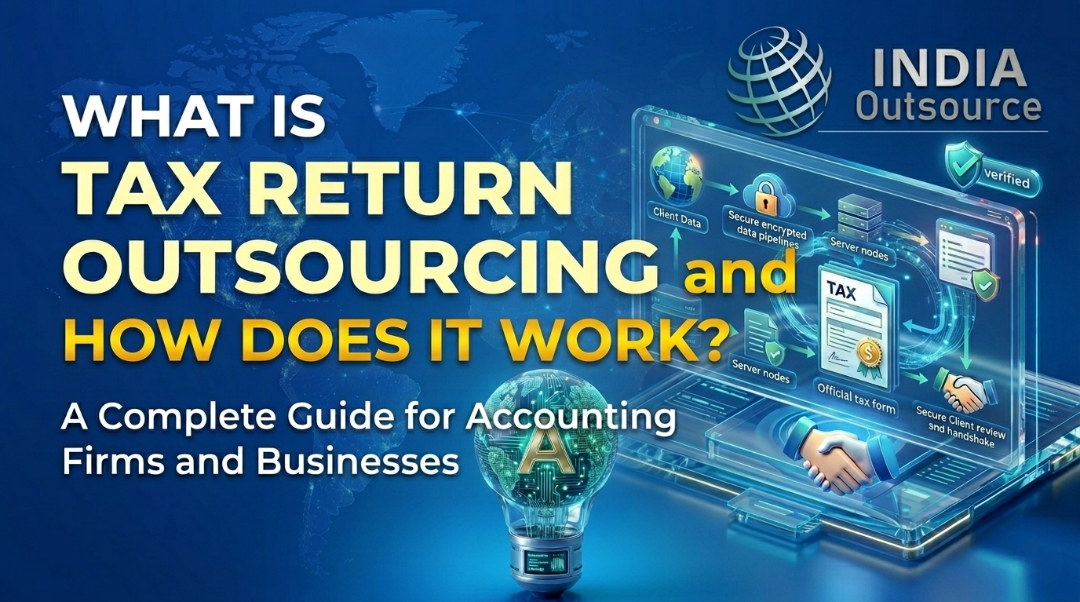
Tax Return Outsourcing: The Smart Solution Transforming Modern Tax Preparation
In today’s fast-paced financial landscape, accounting firms, CPAs, tax professionals, and businesses face increasing pressure to handle ever expanding tax loads while remaining accurate, compliant and profitable. Taxations are constantly changing, deadlines are more stringent, and clients are waiting for quicker turnaround times than ever before.
Tax return outsourcing has come as a game-changer in this scenario.
Instead of handling tax matters from within, firms can also use a professional tax outsourcing firm which can prepare and review tax returns, and keep an eye on compliance-related activities, efficiently and at a lower cost. Through the use of skilled tax experts, cutting-edge technology and scalable resources, businesses can streamline processes, cut down on overheads, increase accuracy and concentrate on providing more value-added tax advisory services to clients.
Tax return outsourcing can be a major competitive advantage for any CPA company or business, especially during busy tax periods, or in improving the tax compliance process.
This guide is about tax return outsourcing services. It will tell you everything you need to know about tax return outsourcing services. You will learn about the things, about tax return outsourcing services how it works what kind of services are included how much it costs what problems you might have and the best ways to do it with tax return outsourcing services.
What Is Tax Return Outsourcing?
Tax return outsourcing refers to the outsourcing of the tax preparation and compliance process to a partner of qualified tax professionals. These professionals prepare and review tax returns and provide assistance to accounting firms, CPAs, enrolled agents, and businesses.
The outsourced team functions as an extension of your company and takes on a range of tax functions, operating under confidentiality guidelines, compliance regulations and quality standards.
Common tax returns that are outsourced include:
- Individual Tax Returns (Form 1040)
- Corporate Tax Returns
- Partnership Tax Returns
- S Corporation Tax Returns
- Trust and Estate Tax Returns
- Nonprofit Tax Returns
- State Tax Filings
- International Tax Returns
- Sales and Use Tax Returns
Outsourcing tax returns is a very flexible and cost effective business plan because the experts can be hired or released depending on the demand.
Why Is Tax Return Outsourcing Becoming So Popular?
There are a number of issues that the accounting industry is challenged with:
Increasing Tax Complexity
There is constant legal change and advancements in expertise, which necessitates ongoing education and knowledge. Outsourcing providers will have teams of experts who keep abreast of new tax laws.
Talent Shortages
Recruitment and retention of qualified tax personnel are always a huge challenge for many accounting firms. This problem can be resolved by outsourcing.
Seasonal Workload Fluctuations
Tax season is a time of heavy workload. It’s expensive and wasteful to hire permanent staff when the job comes and goes.
Cost Pressures
The costs associated with having in-house tax function include:
- Salaries
- Employee benefits
- Office space
- Software licenses
- Training costs
- Recruitment expenses
This helps to keep the operational costs low by outsourcing.
Client Expectations
Clients want faster turnaround, more accuracy and support throughout the year. Outsourcing is effective in fulfilling these expectations.
How Does Tax Return Outsourcing Work?
Tax return outsourcing processes are important for organizations to understand in order to be more efficient and maintain quality standards.
Step 1: Client Data Collection
The accounting firm collects the financial paperwork of clients, such as:
- W-2 Forms
- 1099 Forms
- Income Statements
- Bank Statements
- Investment Records
- Prior-Year Tax Returns
- Business Financial Statements
The information is safely stored on a cloud-based portal or document management system.
Step 2: Document Review and Organization
The outsourcing provider reviews submitted documents to ensure completeness and accuracy.
This stage includes:
- Data verification
- Missing document identification
- Financial record organization
- Tax category classification
Step 3: Tax Return Preparation
Tax returns are prepared by a qualified tax professional employing specialised tax software.
Tasks may include:
- Income calculations
- Deduction identification
- Tax credit analysis
- Depreciation calculations
- Schedule preparation
- State and federal tax computations
Step 4: Quality Review Process
Most outsourcing companies have several layers of quality assurance.
This may include:
- Peer reviews
- Senior tax reviewer audits
- Compliance verification
- Error detection procedures
The goal is to minimize inaccuracies and ensure regulatory compliance.
Step 5: Return Delivery
Tax returns are safely submitted back to the accounting firm for final review and approval.
The firm maintains control over:
- Client communication
- Final review
- Tax filing submission
- Advisory recommendations
Step 6: Client Filing and Support
Once approved, the company submits the tax return and helps the client with any questions, amendments or future tax planning.
Types of Tax Return Outsourcing Services
The tax outsourcing providers usually provide a variety of services.
Individual Tax Return Preparation
Includes:
- Form 1040 preparation
- Schedule A, B, C, D, and E
- Itemized deductions
- Tax credits
- Investment reporting
Business Tax Return Preparation
Covers:
- Corporations
- Partnerships
- LLCs
- Sole Proprietorships
- S Corporations
State and Local Tax Compliance
Includes:
- Multi-state filings
- State income tax returns
- Sales tax returns
- Franchise tax filings
International Tax Services
Supports:
- Foreign income reporting
- International tax compliance
- Cross-border tax planning
- Foreign tax credits
Tax Review Services
There are businesses that outsource the review process alone, in order to enhance the quality and minimize risks.
Key Benefits of Tax Return Outsourcing
Significant Cost Savings
In outsourcing, the cost of operation can be lowered by avoiding the following costs:
- Recruitment
- Training
- Employee benefits
- Infrastructure
- Technology investments
Access to Tax Experts
Providers use tax experts who are well trained and knowledgable about tax in a range of jurisdictions and industries.
Increased Scalability
The companies can easily scale resources during busy tax season without employing temporary people.
Faster Turnaround Times
Specialists can deal with returns more effectively, allowing businesses to fulfil deadlines and boost consumer satisfaction.
Improved Accuracy
The use of experienced professionals and multi-level review systems to minimise errors and compliance risks.
Focus on Core Services
By outsourcing, companies can focus more on:
- Client advisory services
- Tax planning
- Business consulting
- Financial strategy
They are services that provide more profit than simple tax preparation services.
Technology Used in Tax Return Outsourcing
The modern tax outsourcing solutions are encouraged by the use of advanced technologies.
Cloud-Based Document Management
Secure platforms facilitate:
- Document sharing
- Collaboration
- Data storage
- Workflow management
Tax Preparation Software
Popular software solutions include:
- UltraTax CS
- Drake Tax
- Lacerte
- ProSeries
- CCH Axcess Tax
Data Security Systems
To get to this point, leading outsourcing providers adopt:
- Encryption protocols
- Secure file transfer systems
- Multi-factor authentication
- Access controls
- Data backup systems
Automation and AI
There are a number of providers that employ automation tools to:
- Extract financial data
- Validate information
- Reduce manual entry
- Improve accuracy
Challenges of Tax Return Outsourcing
While there are many advantages to outsourcing, there are some potential disadvantages to keep in mind.
Data Security Concerns
Tax information is very sensitive information. Outsourcing companies need to make sure to have strict security measures of their outsourcing partners.
Communication Barriers
Working with offshore teams may introduce communication challenges due to:
- Time zone differences
- Language variations
- Workflow coordination
Quality Variability
Not every provider will have the same level of experience and quality assurance.
Compliance Risks
Choosing an inexperienced provider can bring up the regulatory and compliance risk.
Best Practices for Successful Tax Return Outsourcing
Choose an Experienced Provider
Evaluate:
- Industry experience
- Tax expertise
- Certifications
- Client testimonials
Establish Clear Workflows
Define:
- Roles and responsibilities
- Turnaround expectations
- Communication procedures
- Review protocols
Prioritize Data Security
Verify that providers comply with:
- IRS security requirements
- Data privacy regulations
- Cybersecurity best practices
Start with a Pilot Project
Test the outsourcing arrangement for a few tax returns before expanding.
Monitor Performance
Track key performance indicators (KPIs) such as:
- Accuracy rates
- Turnaround times
- Client satisfaction
- Cost savings
Who Should Consider Tax Return Outsourcing?
Tax return outsourcing is a perfect solution for:
CPA Firms
Scheduling for busy seasons and solving the staffing issues.
Accounting Firms
Desiring increased efficiency and/or profitability.
Tax Professionals
Looking for specific assistance on tricky tax engagements.
Small Businesses
Wanting cost-effective tax compliance solutions.
Large Enterprises
Handling complex tax reporting requirements in a myriad of jurisdictions.
Future Trends in Tax Return Outsourcing
The future of tax outsourcing is being influenced by the following:
- Artificial Intelligence
- Machine Learning
- Robotic Process Automation
- Cloud-Based Collaboration
- Real-Time Data Analytics
- Enhanced Cybersecurity Solutions
These new ideas are going to make outsourced tax work better more accurate and more helpful to the company.
Conclusion
Outsourcing tax returns is now a way for accounting firms and businesses to get work done faster save money and do a better job. When companies use tax professionals, new technology and resources that can grow with them they can make tax preparation easier while still following the rules and getting things right.
As tax laws keep changing and there is work to do outsourcing is a flexible way to handle tax tasks. Companies that outsource tax returns can focus on growing, working with clients and giving advice while still taking care of their tax duties on time and accurately. Tax return outsourcing is a solution because it helps companies do their tax work in a better way. Outsourcing tax returns makes it possible for firms to focus on what’s important to them, like helping clients and giving good advice while tax return outsourcing takes care of the tax work.
Ready to Streamline Your Tax Preparation Process?
Contact US Today!
FAQs
1. What is tax return outsourcing?
Outsourcing tax returns refers to the process of assigning tax preparation, tax review and tax compliance duties to an external group of qualified tax specialists. Outsourced tax services are utilized by accounting firms, CPAs, and businesses to cut down on costs, maximize efficiency, assure compliance, and overcome seasonal workload without increasing in-house personnel.
2. How does tax return outsourcing work?
Typical tax return outsourcing services include gathering client financial correspondence, securely passing the information gathered to an outsourcing provider, preparing the tax returns, performing quality control and returning the returns to the accounting firm for final signature and submission. The outsourcing provider becomes part of the firm’s tax team.
3. What are the benefits of outsourcing tax return preparation?
There are a number of advantages to outsourcing tax return preparation, such as reduced operating costs, expertise in tax preparation, quicker turnaround, reduced errors, greater capacity during tax season, and client advisory and high value services.
4. Is tax return outsourcing secure?
Yes good tax outsourcing companies use security measures to protect your sensitive info. They use things like encryption secure file transfers, special logins and confidentiality agreements.
5. Who can benefit from tax return outsourcing?
For CPA firms, accounting firms, tax consultants, enrolled agents, small businesses, large enterprises, and organizations that face a surge in work volume during certain times of the year, tax return outsourcing is a great advantage.
6. What types of tax returns can be outsourced?
A lot of tax returns can be outsourced. These include:
- Tax returns
- Corporate tax returns
- Partnership tax returns
- S corporation tax returns
- Trust and estate returns
- Nonprofit tax returns
- State tax filings
- International tax returns
7. How much does tax return outsourcing cost?
The cost of outsourcing tax returns depends on things. These are:
- How complex the return is
- How quickly you need it done
- How work there is
- What services are provided?
Most companies find outsourcing tax returns is cheaper than hiring a full-time tax team.
8. Can CPA firms outsource tax preparation services?
Yes CPA firms often get help with tax preparation from companies to handle the extra work during busy seasons. This helps them get more done solve staffing problems and make money. They still get to control how clients are treated and approve tax returns.
9. What is the difference between tax outsourcing and in-house tax preparation?
When you do tax prep in-house your own employees do the work. With tax outsourcing you work with a team of tax pros from another company. Outsourcing gives you flexibility makes it easier to handle big or small workloads and can save you money.. With in-house teams you can keep a closer eye on things.
10. How do I choose the right tax return outsourcing provider?
When choosing a tax outsourcing provider think about:
- Their experience, in the industry
- Their tax expertise
- Their data security standards
- How quickly they can turn things around
- Their software skills
- Their quality control processes
- What other clients say about them
- How well they communicate
Tax return outsourcing providers vary. Choose one that meets your needs.