
Category Archives: Post

bookkeeping

Why Accurate Bookkeeping Is Essential for Business Growth: The Foundation of Financial Success

The Hidden Engine behind Every Successful Business

Growth is not just about sales, marketing or innovation today in the competitive business world. A solid financial base is the foundation of a successful business, enabling good business decisions, positive growth and profitability. Perhaps one of the most important, but underutilized parts of this foundation is accurate bookkeeping.

For many business owners, bookkeeping is a chore, bookkeeping and accounting a task they concentrate on getting more customers, generating more revenue or optimizing operations. But bookkeeping is more than just entering transactions. It is the financial engine of a business and can give immediate clues to cash flow, profit, expenditure and business finance.

Without accurate bookkeeping businesses make decisions based on wrong or incomplete data. This leads to problems with cash flow, tax penalties missed chances to grow and even business failure. Businesses with good and accurate financial records understand their financial situation clearly. They plan ahead manage risks well and grow steadily.

In this detailed guide we will look at why accurate bookkeeping is essential for a business growth. We will see how it affects everything a business does and why investing in professional bookkeeping services can be a very smart decision for a business owner.

What Is Bookkeeping?

Bookkeeping is the systematic process of recording, organizing, tracking and maintaining financial transactions of a company. These transactions include:

  • Sales and revenue
  • Purchases and expenses
  • Accounts receivable
  • Accounts payable
  • Payroll transactions
  • Bank reconciliations
  • Tax-related records
  • Asset and liability tracking

The function of bookkeeping is to keep track of money so that this information can be used for accounting making reports about money getting taxes ready and planning the business.

Why Accurate Bookkeeping Matters for Business Growth

Data is the key ingredient to business growth. The key to financial intelligence is accurate bookkeeping – it helps to spot opportunities, face obstacles and meet business goals.

Let’s explore the major factors why good bookkeeping is important for business success.

  1. Provides Clear Financial Visibility

Having accurate bookkeeping gives one the most significant benefit of financial transparency.

With good financial records, business owners can quickly have access to essential information like:

  • Current cash position
  • Revenue trends
  • Profit margins
  • Outstanding invoices
  • Operational expenses
  • Debt obligations

This helps the people in charge of the business know where their company current financial position.

If bookkeeping is not done correctly businesses have to make decisions based on what they think is happening. They might be wrong.

Benefits of Financial Visibility

  • Better budgeting
  • Improved forecasting
  • Faster decision-making
  • Enhanced financial control
  • Increased profitability

Financial clarity is the basis for the sustainable growth of business.

  1. Improves Cash Flow Management

The lifeblood of every business is cash flow.

Even if a business is profitable, it can sink because of cash flow issues. Good bookkeeping enables businesses to track:

  • Incoming revenue
  • Customer payments
  • Vendor obligations
  • Recurring expenses
  • Payroll commitments

Accurate records can help business owners to predict periods of cash shortage and make proactive decisions about managing them.

How Bookkeeping Supports Cash Flow

  • Tracks outstanding invoices
  • Identifies overdue payments
  • Monitors recurring expenses
  • Prevents overspending
  • Supports cash flow forecasting

A good cash flow management signals that a business is in a position to invest in growth opportunities and deal with the uncertainty of the economy.

  1. Enables Better Business Decisions

The basis of a successful business decision is accurate financial data.

From hiring new staff, launching a new product, opening a new location or investing in technology, bookkeeping supplies the information vital for assessing risks and opportunities.

The following financial reports are produced as a result of bookkeeping:

Profit and Loss Statement

Shows revenue, expenses, and profitability.

Balance Sheet

Gives a picture of assets, liabilities and equity.

Cash Flow Statement

Tracks the movement of cash throughout the business.

These reports enable business owners to make informed choices based on actual financial performance, not intuition.

  1. Simplifies Tax Preparation and Compliance

Businesses that have financial records that are not organized can find tax season stressful.

Keeping a well-kept bookkeeping record allows for all transactions to be recorded accurately throughout the year, easing tax preparations.

Benefits include:

  • Faster tax filing
  • Reduced accounting costs
  • Accurate tax calculations
  • Compliance with regulations
  • Lower risk of audits

Good bookkeeping can also ensure that businesses are aware of which deductions and tax saving measures they can take advantage of.

Common Tax Deductions That Require Accurate Records

  • Business travel
  • Office expenses
  • Marketing costs
  • Employee salaries
  • Equipment purchases
  • Professional services

The benefits of accurate bookkeeping are that it helps to minimize tax-related risks, as well as maximise potential tax saving.

  1. Helps Secure Business Financing

When applying for loans, lines of credit, or investor funding, financial credibility is essential.

Lenders and investors typically require:

  • Profit and loss statements
  • Balance sheets
  • Cash flow reports
  • Tax returns
  • Financial forecasts

These documents can be readily provided, and a business with good bookkeeping will show financial stability.

Why Investors Value Accurate Financial Records

Investors are looking for assurances that:

  • Financial information is reliable
  • Management understands business performance
  • Growth projections are realistic
  • Risks are properly managed

A well-kept book enhances trust and access to funding opportunities.

  1. Supports Strategic Business Planning

Growth doesn’t happen by accident.

For businesses, it is essential to have financial information that is clear, so that they can make good strategies and long-term plans.

Accurate bookkeeping helps organizations:

  • Set realistic goals
  • Forecast future revenue
  • Plan budgets
  • Allocate resources efficiently
  • Evaluate growth opportunities

A business owner can determine which products, services or departments make the most profit and direct resources to them.

When financial data is available, it greatly improves the strategic planning process.

  1. Identifies Cost-Saving Opportunities

A lot of businesses are costing themselves business due to the lack of awareness of the inefficiencies.

Accurate bookkeeping helps uncover:

  • Unnecessary expenses
  • Vendor overcharges
  • Subscription waste
  • Operational inefficiencies
  • Excess inventory costs

Businesses can maximize spending and enhance profitability by reviewing their finances regularly.

Examples of Cost Reduction Through Bookkeeping

  • Negotiating better supplier contracts
  • Eliminating redundant software subscriptions
  • Reducing inventory carrying costs
  • Improving operational efficiency

Even small savings can significantly impact long-term profitability.

  1. Strengthens Business Performance Monitoring

Continuous Performance Evaluation is essential for Growth.

Good bookkeeping enables companies to monitor their essential performance metrics (KPIs) such as:

  • Revenue growth
  • Gross profit margin
  • Net profit margin
  • Customer acquisition costs
  • Operating expenses
  • Cash flow ratios

Frequent financial checks will enable business owners to discover trends and make changes in advance of a problem gets further out of hand.

Those companies that regularly track performance have higher rates of sustainable growth.

  1. Reduces Financial Errors and Fraud Risks

The risk of financial inaccuracies is great.

The most typical bookkeeping mistakes are:

  • Duplicate transactions
  • Missing expenses
  • Incorrect revenue entries
  • Payroll mistakes
  • Tax reporting errors

Effective bookkeeping minimises these risks by ensuring regular reconciling and systematic record keeping.

Fraud Prevention Benefits

Good bookkeeping systems enable the identification of:

  • Unauthorized transactions
  • Employee theft
  • Expense manipulation
  • Vendor fraud
  • Accounting irregularities

Early detection helps to safeguard business assets and to maintain financial integrity.

  1. Enhances Business Valuation

Bookkeeping is particularly crucial if you are aiming to sell your business, seek investors or make a merger with another business.

Before making a decision, potential buyers and investors consider the financial records carefully.

Well-maintained books demonstrate:

  • Financial stability
  • Revenue consistency
  • Profitability
  • Operational efficiency
  • Growth potential

A company that has a good record of finances may be valued higher because it is less risky to the potential buyers.

Consequences of Poor Bookkeeping

It isn’t until something goes wrong that a lot of businesses realize how dangerous and damaging inaccurate bookkeeping can be.

Common consequences include:

Cash Flow Crises

Failure to pay wages, vendors or operating costs.

Tax Penalties

Late filing, incorrect reporting and compliance issues.

Poor Decision-Making

Business decisions based on incorrect financial data.

Missed Growth Opportunities

Lack of financial visibility limits expansion potential.

Damaged Credibility

Investors, lenders and partners may lose faith.

Increased Audit Risk

Records that are not complete can be subject to regulatory review.

The price of bad bookkeeping will be far too high to record financial data accurately.

Best Practices for Maintaining Accurate Bookkeeping

Businesses should follow the following bookkeeping best practices to maximize business growth:

Record Transactions Promptly

Keep financial records up-to-date and accurate.

Reconcile Accounts Monthly

Check internal data against the bank statements.

Separate Personal and Business Finances

Maintain dedicated business accounts.

Use Reliable Accounting Software

Automate routine bookkeeping tasks and reduce errors.

Track All Expenses

Keep good records and receipts.

Generate Financial Reports Regularly

Monthly review of financial statements.

Work with Professional Bookkeepers

Use the person’s expertise to make sure of compliance and accuracy.

The Role of Professional Bookkeeping Services

The more complex a business gets, the more complex bookkeeping becomes.

Professional bookkeeping services provide:

  • Accurate transaction recording
  • Financial reporting
  • Bank reconciliations
  • Payroll management
  • Tax-ready financial records
  • Compliance support

A business owner can concentrate on growth and ensure financial records are accurate and up to date without having to worry about bookkeeping duties.

Professional bookkeepers are really helpful because they give the business owner valuable insights into the finances, which helps the business owner have long term success and make good decisions about what to do next, with the business.

Conclusion

Bookkeeping is really important for any business. It is not something you do in the back office administrative function. Bookkeeping is a powerful tool to help your business grow.

It helps you understand your financial clarity the cash flow you have make decisions and follow tax rules. Bookkeeping also helps reduce risks and makes your business strong for a time.

If you have a business a small business or a big company you need to keep track of your financials correctly. This helps you deal with problems find chance and reach your goals in the long run.

Businesses that prioritize bookkeeping seriously do better, than others. They make smarter decisions, improving profitability and keep growing in a world where many businesses are competing. Bookkeeping helps these businesses stay ahead and grow more.

Want to make your bookkeeping easier?

Contact us now for a free consultation 

FAQs

1. Why is accurate bookkeeping important for business growth?

Accurate bookkeeping provides clear financial insights, improves cash flow management, supports strategic decision-making, and helps businesses identify growth opportunities.

2. How does bookkeeping help with cash flow management?

Bookkeeping keeps tabs on the income and expenses of a business, tracks accounts received and payable, and ensures that the business is not short of cash.

3. Can poor bookkeeping affect business profitability?

Yes. Financial errors, deductions, overspending, cash flow issues and poor business decisions that decrease profits are potential outcomes of poor bookkeeping.

4. How often should a business update its bookkeeping records?

Businesses should update bookkeeping records regularly, ideally daily or weekly, to maintain accurate financial information and prevent reporting errors.

5. What are the benefits of hiring professional bookkeeping services?

Professional bookkeepers ensure accurate financial records, tax compliance, timely reporting, reduced errors, and valuable financial insights that support business growth.

6. How does bookkeeping help during tax season?

Proper bookkeeping ensures that financial records are properly maintained throughout the year and tax preparation is easier, reduces compliance risk, and assists in a complete inventory of tax deductible items.

7. Can bookkeeping help attract investors and lenders?

Yes. Bookkeeping is very helpful. It shows that our business is stable and transparent. This means we can get loans and funding easily.
Tax Return Outsourcing

What Is Tax Return Outsourcing and How Does It Work? A Complete Guide for Accounting Firms and Businesses

Tax Return Outsourcing: The Smart Solution Transforming Modern Tax Preparation

In today’s fast-paced financial landscape, accounting firms, CPAs, tax professionals, and businesses face increasing pressure to handle ever expanding tax loads while remaining accurate, compliant and profitable. Taxations are constantly changing, deadlines are more stringent, and clients are waiting for quicker turnaround times than ever before.

Tax return outsourcing has come as a game-changer in this scenario.

Instead of handling tax matters from within, firms can also use a professional tax outsourcing firm which can prepare and review tax returns, and keep an eye on compliance-related activities, efficiently and at a lower cost. Through the use of skilled tax experts, cutting-edge technology and scalable resources, businesses can streamline processes, cut down on overheads, increase accuracy and concentrate on providing more value-added tax advisory services to clients.

Tax return outsourcing can be a major competitive advantage for any CPA company or business, especially during busy tax periods, or in improving the tax compliance process.

This guide is about tax return outsourcing services. It will tell you everything you need to know about tax return outsourcing services. You will learn about the things, about tax return outsourcing services how it works what kind of services are included how much it costs what problems you might have and the best ways to do it with tax return outsourcing services.

What Is Tax Return Outsourcing?

Tax return outsourcing refers to the outsourcing of the tax preparation and compliance process to a partner of qualified tax professionals. These professionals prepare and review tax returns and provide assistance to accounting firms, CPAs, enrolled agents, and businesses.

The outsourced team functions as an extension of your company and takes on a range of tax functions, operating under confidentiality guidelines, compliance regulations and quality standards.

Common tax returns that are outsourced include:

  • Individual Tax Returns (Form 1040)
  • Corporate Tax Returns
  • Partnership Tax Returns
  • S Corporation Tax Returns
  • Trust and Estate Tax Returns
  • Nonprofit Tax Returns
  • State Tax Filings
  • International Tax Returns
  • Sales and Use Tax Returns

Outsourcing tax returns is a very flexible and cost effective business plan because the experts can be hired or released depending on the demand.

Why Is Tax Return Outsourcing Becoming So Popular?

There are a number of issues that the accounting industry is challenged with:

Increasing Tax Complexity

There is constant legal change and advancements in expertise, which necessitates ongoing education and knowledge. Outsourcing providers will have teams of experts who keep abreast of new tax laws.

Talent Shortages

Recruitment and retention of qualified tax personnel are always a huge challenge for many accounting firms. This problem can be resolved by outsourcing.

Seasonal Workload Fluctuations

Tax season is a time of heavy workload. It’s expensive and wasteful to hire permanent staff when the job comes and goes.

Cost Pressures

The costs associated with having in-house tax function include:

  • Salaries
  • Employee benefits
  • Office space
  • Software licenses
  • Training costs
  • Recruitment expenses

This helps to keep the operational costs low by outsourcing.

Client Expectations

Clients want faster turnaround, more accuracy and support throughout the year. Outsourcing is effective in fulfilling these expectations.

How Does Tax Return Outsourcing Work?

Tax return outsourcing processes are important for organizations to understand in order to be more efficient and maintain quality standards.

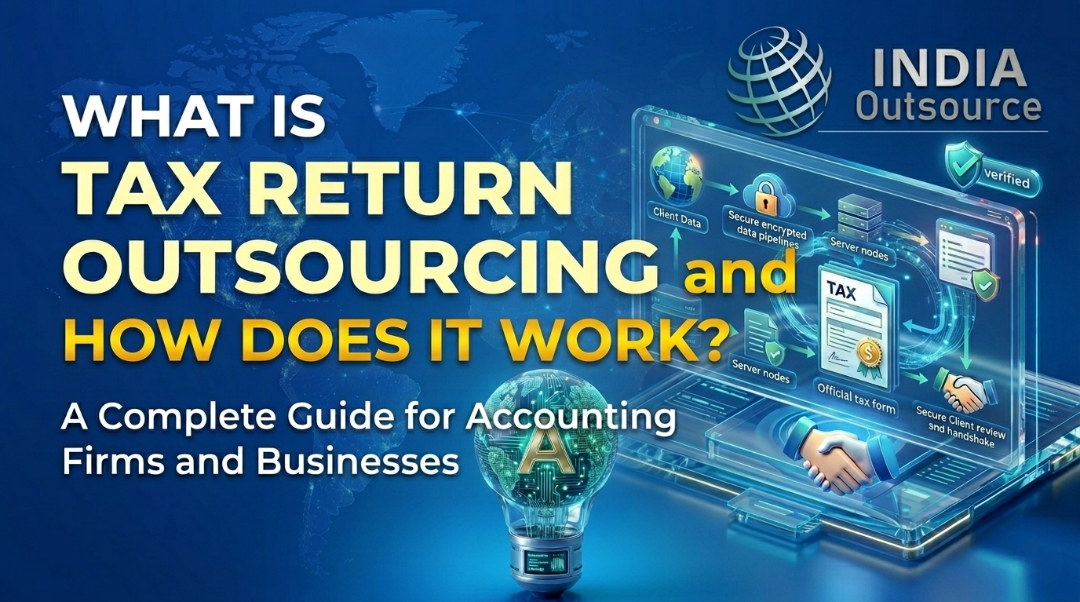
Step 1: Client Data Collection

The accounting firm collects the financial paperwork of clients, such as:

  • W-2 Forms
  • 1099 Forms
  • Income Statements
  • Bank Statements
  • Investment Records
  • Prior-Year Tax Returns
  • Business Financial Statements

The information is safely stored on a cloud-based portal or document management system.

Step 2: Document Review and Organization

The outsourcing provider reviews submitted documents to ensure completeness and accuracy.

This stage includes:

  • Data verification
  • Missing document identification
  • Financial record organization
  • Tax category classification

Step 3: Tax Return Preparation

Tax returns are prepared by a qualified tax professional employing specialised tax software.

Tasks may include:

  • Income calculations
  • Deduction identification
  • Tax credit analysis
  • Depreciation calculations
  • Schedule preparation
  • State and federal tax computations

Step 4: Quality Review Process

Most outsourcing companies have several layers of quality assurance.

This may include:

  • Peer reviews
  • Senior tax reviewer audits
  • Compliance verification
  • Error detection procedures

The goal is to minimize inaccuracies and ensure regulatory compliance.

Step 5: Return Delivery

Tax returns are safely submitted back to the accounting firm for final review and approval.

The firm maintains control over:

  • Client communication
  • Final review
  • Tax filing submission
  • Advisory recommendations

Step 6: Client Filing and Support

Once approved, the company submits the tax return and helps the client with any questions, amendments or future tax planning.

Types of Tax Return Outsourcing Services

The tax outsourcing providers usually provide a variety of services.

Individual Tax Return Preparation

Includes:

  • Form 1040 preparation
  • Schedule A, B, C, D, and E
  • Itemized deductions
  • Tax credits
  • Investment reporting

Business Tax Return Preparation

Covers:

  • Corporations
  • Partnerships
  • LLCs
  • Sole Proprietorships
  • S Corporations

State and Local Tax Compliance

Includes:

  • Multi-state filings
  • State income tax returns
  • Sales tax returns
  • Franchise tax filings

International Tax Services

Supports:

  • Foreign income reporting
  • International tax compliance
  • Cross-border tax planning
  • Foreign tax credits

Tax Review Services

There are businesses that outsource the review process alone, in order to enhance the quality and minimize risks.

Key Benefits of Tax Return Outsourcing

Significant Cost Savings

In outsourcing, the cost of operation can be lowered by avoiding the following costs:

  • Recruitment
  • Training
  • Employee benefits
  • Infrastructure
  • Technology investments

Access to Tax Experts

Providers use tax experts who are well trained and knowledgable about tax in a range of jurisdictions and industries.

Increased Scalability

The companies can easily scale resources during busy tax season without employing temporary people.

Faster Turnaround Times

Specialists can deal with returns more effectively, allowing businesses to fulfil deadlines and boost consumer satisfaction.

Improved Accuracy

The use of experienced professionals and multi-level review systems to minimise errors and compliance risks.

Focus on Core Services

By outsourcing, companies can focus more on:

  • Client advisory services
  • Tax planning
  • Business consulting
  • Financial strategy

They are services that provide more profit than simple tax preparation services.

Technology Used in Tax Return Outsourcing

The modern tax outsourcing solutions are encouraged by the use of advanced technologies.

Cloud-Based Document Management

Secure platforms facilitate:

  • Document sharing
  • Collaboration
  • Data storage
  • Workflow management

Tax Preparation Software

Popular software solutions include:

  • UltraTax CS
  • Drake Tax
  • Lacerte
  • ProSeries
  • CCH Axcess Tax

Data Security Systems

To get to this point, leading outsourcing providers adopt:

  • Encryption protocols
  • Secure file transfer systems
  • Multi-factor authentication
  • Access controls
  • Data backup systems

Automation and AI

There are a number of providers that employ automation tools to:

  • Extract financial data
  • Validate information
  • Reduce manual entry
  • Improve accuracy

Challenges of Tax Return Outsourcing

While there are many advantages to outsourcing, there are some potential disadvantages to keep in mind.

Data Security Concerns

Tax information is very sensitive information. Outsourcing companies need to make sure to have strict security measures of their outsourcing partners.

Communication Barriers

Working with offshore teams may introduce communication challenges due to:

  • Time zone differences
  • Language variations
  • Workflow coordination

Quality Variability

Not every provider will have the same level of experience and quality assurance.

Compliance Risks

Choosing an inexperienced provider can bring up the regulatory and compliance risk.

Best Practices for Successful Tax Return Outsourcing

Choose an Experienced Provider

Evaluate:

  • Industry experience
  • Tax expertise
  • Certifications
  • Client testimonials

Establish Clear Workflows

Define:

  • Roles and responsibilities
  • Turnaround expectations
  • Communication procedures
  • Review protocols

Prioritize Data Security

Verify that providers comply with:

  • IRS security requirements
  • Data privacy regulations
  • Cybersecurity best practices

Start with a Pilot Project

Test the outsourcing arrangement for a few tax returns before expanding.

Monitor Performance

Track key performance indicators (KPIs) such as:

  • Accuracy rates
  • Turnaround times
  • Client satisfaction
  • Cost savings

Who Should Consider Tax Return Outsourcing?

Tax return outsourcing is a perfect solution for:

CPA Firms

Scheduling for busy seasons and solving the staffing issues.

Accounting Firms

Desiring increased efficiency and/or profitability.

Tax Professionals

Looking for specific assistance on tricky tax engagements.

Small Businesses

Wanting cost-effective tax compliance solutions.

Large Enterprises

Handling complex tax reporting requirements in a myriad of jurisdictions.

Future Trends in Tax Return Outsourcing

The future of tax outsourcing is being influenced by the following:

  • Artificial Intelligence
  • Machine Learning
  • Robotic Process Automation
  • Cloud-Based Collaboration
  • Real-Time Data Analytics
  • Enhanced Cybersecurity Solutions

These new ideas are going to make outsourced tax work better more accurate and more helpful to the company.

Conclusion

Outsourcing tax returns is now a way for accounting firms and businesses to get work done faster save money and do a better job. When companies use tax professionals, new technology and resources that can grow with them they can make tax preparation easier while still following the rules and getting things right.

As tax laws keep changing and there is work to do outsourcing is a flexible way to handle tax tasks. Companies that outsource tax returns can focus on growing, working with clients and giving advice while still taking care of their tax duties on time and accurately. Tax return outsourcing is a solution because it helps companies do their tax work in a better way. Outsourcing tax returns makes it possible for firms to focus on what’s important to them, like helping clients and giving good advice while tax return outsourcing takes care of the tax work.

Ready to Streamline Your Tax Preparation Process?

Contact US Today!

FAQs

1. What is tax return outsourcing?

Outsourcing tax returns refers to the process of assigning tax preparation, tax review and tax compliance duties to an external group of qualified tax specialists. Outsourced tax services are utilized by accounting firms, CPAs, and businesses to cut down on costs, maximize efficiency, assure compliance, and overcome seasonal workload without increasing in-house personnel.

2. How does tax return outsourcing work?

Typical tax return outsourcing services include gathering client financial correspondence, securely passing the information gathered to an outsourcing provider, preparing the tax returns, performing quality control and returning the returns to the accounting firm for final signature and submission. The outsourcing provider becomes part of the firm’s tax team.

3. What are the benefits of outsourcing tax return preparation?

There are a number of advantages to outsourcing tax return preparation, such as reduced operating costs, expertise in tax preparation, quicker turnaround, reduced errors, greater capacity during tax season, and client advisory and high value services.

4. Is tax return outsourcing secure?

Yes good tax outsourcing companies use security measures to protect your sensitive info. They use things like encryption secure file transfers, special logins and confidentiality agreements.

5. Who can benefit from tax return outsourcing?

For CPA firms, accounting firms, tax consultants, enrolled agents, small businesses, large enterprises, and organizations that face a surge in work volume during certain times of the year, tax return outsourcing is a great advantage.

6. What types of tax returns can be outsourced?

A lot of tax returns can be outsourced. These include:

  • Tax returns
  • Corporate tax returns
  • Partnership tax returns
  • S corporation tax returns
  • Trust and estate returns
  • Nonprofit tax returns
  • State tax filings
  • International tax returns

7. How much does tax return outsourcing cost?

The cost of outsourcing tax returns depends on things. These are:

  • How complex the return is
  • How quickly you need it done
  • How work there is
  • What services are provided?

Most companies find outsourcing tax returns is cheaper than hiring a full-time tax team.

8. Can CPA firms outsource tax preparation services?

Yes CPA firms often get help with tax preparation from companies to handle the extra work during busy seasons. This helps them get more done solve staffing problems and make money. They still get to control how clients are treated and approve tax returns.

9. What is the difference between tax outsourcing and in-house tax preparation?

When you do tax prep in-house your own employees do the work. With tax outsourcing you work with a team of tax pros from another company. Outsourcing gives you flexibility makes it easier to handle big or small workloads and can save you money.. With in-house teams you can keep a closer eye on things.

10. How do I choose the right tax return outsourcing provider?

When choosing a tax outsourcing provider think about:

  • Their experience, in the industry
  • Their tax expertise
  • Their data security standards
  • How quickly they can turn things around
  • Their software skills
  • Their quality control processes
  • What other clients say about them
  • How well they communicate

Tax return outsourcing providers vary. Choose one that meets your needs.

Management Accounting

What Are Management Accounting Services and Why Do Businesses Need Them?

In today’s business world making financial decisions is crucial for companies to survive and grow. Businesses that only use fashioned accounting methods often find it hard to know their financial situation manage costs and plan for the future. This is where management accounting services come in.

Management accounting is more than bookkeeping and taxes. It helps businesses get financial information plan strategically budget, analyze performance and make data-driven decisions. Whether you’re a startup, a medium-sized enterprise or a large company, management accounting services can boost profitability improve operations and support long-term growth.

Management accountants help businesses forecast finances, budget, analyze costs and report performance. They act as partners to help businesses understand their finances and run efficiently.

In this guide we’ll look at:

  • What management accounting services are
  • Key functions of management accounting
  • Types of management accounting reports
  • Benefits for businesses
  • Why businesses need management accounting services
  • Difference between financial accounting and management accounting
  • Industries that benefit most
  • How outsourced management accounting services can help
  • Tips for choosing the right service provider

Let’s take a look at the modern-day success of business and explore the reasons why management accounting has become an essential element of modern-day business success.

What Is Management Accounting?

Management accounting, also known as managerial accounting, refers to the process of preparing financial and non-financial information that helps for the business owner, management and business executives that will enable them to make strategic decisions.

Unlike financial accounting, which focuses on preparing reports for external stakeholders such as investors, tax authorities, and regulators, management accounting is primarily used for internal decision-making.

Management accounting services involve:

  • Financial analysis
  • Budget planning
  • Forecasting
  • Cost management
  • Performance evaluation
  • Business strategy support
  • Risk assessment
  • Profitability analysis

The ultimate goal is to provide actionable insights that improve business performance and profitability.

What Are Management Accounting Services?

Management accounting services are expert financial consulting and reporting services that are aimed at assisting companies in tracking, examining and optimizing their finances.

These services can deliver businesses with correct financial information and analysis to help in decision making, budgeting and planning

Core Management Accounting Services Include:

  1. Budgeting and Forecasting

Businesses need realistic budgets and future projections to allocate resources effectively. Management accountants prepare:

  • Annual budgets
  • Cash flow forecasts
  • Revenue forecasts
  • Expense planning
  • Financial projections

This enables businesses to predict their financial problems and possibilities.

  1. Financial Reporting

The work of management accountants is to create internal reports that are tailored to the needs of the business and give a detailed insight into business performance.

Common reports include:

  • Profit and loss statements
  • Cash flow reports
  • KPI dashboards
  • Departmental performance reports
  • Variance analysis reports

These reports enable managers to be aware of the financial position of the business.

  1. Cost Accounting and Cost Control

Effective cost control is essential to profitability.

Management accounting services help businesses:

  • Analyze operational costs
  • Identify unnecessary expenses
  • Improve pricing strategies
  • Reduce waste
  • Increase efficiency

This helps businesses to fine-tune their profit margins.

  1. Cash Flow Management

One of the most common reasons for a business to fail is due to cash flow problems.

Management accounting helps businesses:

  • Monitor cash inflows and outflows
  • Improve liquidity
  • Maintain working capital
  • Plan for future expenses

Effective cash flow management ensures business continuity.

  1. Performance Analysis

Management accountants monitor important business information and ratios to judge the performance of a business.

This may include:

  • Sales performance
  • Productivity analysis
  • Profitability by product/service
  • Employee performance metrics
  • Operational efficiency

Businesses can then improve by informed and strategic nature.

  1. Strategic Financial Planning

Management accounting assists in long-term planning of the business.

Services may include:

  • Expansion planning
  • Investment analysis
  • Risk management
  • Scenario analysis
  • Business growth strategies

This is a way to help achieve sustainable growth in organizations.

Why Do Businesses Need Management Accounting Services?

Today’s business world is dynamic and competitive and contains financial complexities. These are the challenges that management accounting services could help the one overcome successfully.

  1. Better Decision-Making

The policies made for a business shall not be based on assumptions, but shall be based on accurate financial information.

Management accounting provides:

  • Real-time insights
  • Data-driven recommendations
  • Financial performance analysis
  • Forecasting models

This enables leaders to make better informed strategic decisions.

  1. Improved Profitability

Profit optimization is one of the major benefits of management accounting.

Businesses can:

  • Identify profitable products/services
  • Eliminate unnecessary costs
  • Improve operational efficiency
  • Optimize pricing strategies

This directly leads to higher profit margins.

  1. Enhanced Financial Control

If not managed properly, businesses can easily let costs run amok.

Management accounting helps companies:

  • Track spending
  • Monitor budgets
  • Prevent overspending
  • Improve accountability

This enhances financial discipline in the organization.

  1. Accurate Budget Planning

Poor budgeting can lead to financial instability.

Management accountants create reasonable budgets on the basis of:

  • Historical data
  • Market trends
  • Business objectives
  • Revenue projections

This enhances financial planning and the allocation of resources.

  1. Risk Reduction

Every business faces financial risks.

Management accounting identifies:

  • Cash flow risks
  • Profitability issues
  • Operational inefficiencies
  • Investment risks

This can enable businesses to take proactive corrective measures.

  1. Supports Business Growth

It is important for growing businesses to have strong financial planning.

Management accounting services can assist companies in the following ways:

  • Scale operations strategically
  • Secure investments
  • Expand into new markets
  • Plan acquisitions

This guarantees the sustainable and controlled growth.

  1. Real-Time Financial Insights

Traditional accounting often focuses on past financial performance.

Management accounting supplies live information that enables companies to be responsive to the shifting market conditions.

Difference Between Financial Accounting and Management Accounting

Feature Financial Accounting Management Accounting
Purpose External reporting Internal decision-making
Audience Investors, regulators, tax authorities Managers and executives
Time Focus Historical data Present and future planning
Reporting Style Standardized reports Customized reports
Frequency Periodic As needed
Regulations Must follow accounting standards Flexible and internal

Both are important, but management accounting is more strategic and operational.

Types of Management Accounting Reports

Budget Reports

Monitor business progress against budgets.

Inventory and Production Reports

Keep track of inventories and production efficiency.

Cash Flow Reports

Analyze liquidity and working capital management.

Variance Analysis Reports

Compare actual performance with forecasts and budgets.

KPI Reports

Measure performance indicators such as:

  • Revenue growth
  • Profit margins
  • Customer acquisition costs
  • Operational efficiency

Profitability Reports

Determine the highest profit product/service or department.

Benefits of Outsourcing Management Accounting Services

There are more and more businesses that opt for outsourced management accounting services rather than having large finance departments.

Cost Savings

Outsourcing reduces:

  • Hiring costs
  • Training expenses
  • Employee benefits
  • Software investment

Access to Expertise

Companies also have access to financial experts who have up-to-date knowledge of the field.

Advanced Technology

External companies typically employ cutting-edge accounting technology and analytics software, which streamlines and enhances reporting precision.

Scalability

Services can easily be scaled up as the company grows.

More Focus on Core Operations

While business owners concentrate on business growth and operations, experts can concentrate on financial analysis and reporting.

Industries That Benefit from Management Accounting Services

Management accounting has a wide application across almost all the industries.

Manufacturing

  • Cost control
  • Inventory management
  • Production efficiency

Retail

  • Sales analysis
  • Pricing optimization
  • Inventory forecasting

Healthcare

  • Budget management
  • Operational efficiency
  • Financial compliance

Construction

  • Project costing
  • Budget tracking
  • Cash flow management

IT and Technology

  • Growth forecasting
  • Investment planning
  • Resource allocation

E-commerce

  • Revenue tracking
  • Profitability analysis
  • Customer acquisition cost analysis

Key Skills of a Management Accountant

The professional management accountant has the expertise in:

  • Financial analysis
  • Strategic planning
  • Budgeting
  • Business forecasting
  • Data interpretation
  • Risk management
  • Cost accounting
  • Financial reporting

They are equipped with accounting knowledge and business strategy.

How to Choose the Right Management Accounting Service Provider

It’s essential to choose the right provider in order to ensure maximum results.

Consider the Following Factors:

Experience and Expertise

Look a provider with industry-specific experience.

Technology and Software

Make sure that they are using higher level accounting and reporting tools.

Custom Reporting Capabilities

Each business will have specific reporting requirements.

Scalability

The provider should be able to help with the future development of the business.

Communication and Support

Communication is key for effective collaboration!

Reputation and Reviews

Look through client reviews and case studies.

Future of Management Accounting

Factors influencing the future of management accounting are:

  • Artificial intelligence
  • Cloud accounting
  • Real-time analytics
  • Automation
  • Predictive forecasting
  • Business intelligence tools

Data-driven financial insights have become a key tool that businesses use in order to stay competitive.

The role of management accountants is changing from number crunchers into business experts.

Conclusion

Even small companies can utilize management accounting services. Having accurate financial information, strategic planning and performance analysis has become a necessity for all businesses to survive and grow in today’s market.

Management accounting offers a range of benefits that empower businesses to make more informed financial choices, such as budgeting, forecasting, cost management, and profitability analysis, among other things.

There are several benefits of management accounting services, especially for startups that are aiming to scale, for SMEs that want to increase their profitability, and for established businesses that want to boost their operational efficiency.

Investing in professional management accounting services is not just about dealing with numbers—it is about creating a significantly more effective and sustained enterprise that is more growth-oriented.

Ready to Improve Your Business Financial Performance?

Contact Us Today

FAQs

1. What are management accounting services?

Management accounting services help businesses. They analyze data. This helps businesses manage budgets. They control costs. It improves cash flow, and make strategic business decisions.

2. Why are management accounting services important for businesses?

These services offer analyses of a company’s finances which can aid in boosting the business’ profitability, cutting bills, controlling risks and making long growth plans.

3. How do management accounting services improve profitability?

Management accountants discover ways to save money. Work out pricing alternatives, enhance operational efficiency and deliver accurate financial forecasting.

4. What is the difference between financial accounting and management accounting?

Financial accounting focuses on external reporting and compliance, while Management Accounting is concerned with the internal management and making business decisions.

  1. Can small businesses benefit from management accounting services?

Yes, small businesses are better off with better budgeting, cash flow management, financial planning and data-driven decision-making.

6. What industries use management accounting services?

Management accounting services are widely used by various industry segments, such as manufacturing, retail, healthcare, construction, IT, and e-commerce.

7. What are the main functions of management accounting?

The main functions are:

  1. Budgeting
  2. Forecasting
  3. Cost accounting
  4. Financial reporting
  5. Performance analysis
  6. Strategic planning

8. Is outsourcing management accounting services beneficial?

Outsourcing helps. It reduces costs. Businesses get advice. Reporting is more accurate. Businesses focus on what they do

9. How does management accounting help in decision-making?

It gives real time businesses reports. And insight into performance. Helping with informed business decisions and future planning.

Payroll Outsourcing Services

What Are Payroll Outsourcing Services in India? A Complete Guide for Businesses

In the present rapidly evolving business landscape, organizations throughout India are striving to become more efficient, cost-effective, and compliant with government standards. In this dynamic business environment, companies around India are always looking for ways to be smarter and more efficient, save money, and meet government standards. Payroll outsourcing services in India are one of the best options that are proving to be of great help in accomplishing these goals.

More and more companies are giving their payroll work to professionals who specialize in payroll services. This is happening with companies that just started and with big companies too. So why are they doing this? Payroll is not about paying people it is also about following the rules calculating taxes sending in reports taking care of benefits for employees keeping records and keeping all the information safe.

A single payroll error can lead to unhappy employees, government penalties, compliance issues, and reputational damage. That’s why businesses are turning toward expert payroll outsourcing companies in India to simplify operations and focus on growth.

This detailed guide covers everything you need to know about payroll outsourcing services in India, including all the benefits, features, processes, compliance requirements, costs, and how to choose the right payroll partner.

What Is Payroll Outsourcing?

The payroll outsourcing is the process of hiring a third-party payroll service provider to manage payroll-related tasks on behalf of a business.

These services typically include:

  • Salary calculation
  • Payslip generation
  • Employee reimbursement management
  • Tax deductions (TDS)
  • Provident Fund (PF) management
  • Employee State Insurance (ESI) compliance
  • Professional tax calculations
  • Bonus and incentive processing
  • Leave and attendance integration
  • Payroll tax filing
  • Full & final settlements
  • Statutory compliance reporting

Rather than having a big payroll department, companies hire out to payroll specialists.

Why Payroll Outsourcing Is Growing Rapidly in India

India has one of the most complex payroll and labour compliance regimes globally. There are several laws that vary according to state, employee type and industry that businesses have to adhere to.

Some major reasons businesses outsource payroll include:

  1. Complex Labor Laws

Indian payroll law involve:

  • EPF compliance
  • ESI regulations
  • Gratuity calculations
  • TDS deductions
  • Labor welfare fund compliance
  • Professional tax
  • Shops & Establishment rules

It is a time consuming and risky task to manage all these manually.

  1. Frequent Regulatory Changes

India’s laws on taxes and work regulations are constantly changing. The payroll outsourcing providers keep abreast of any legal modifications and make sure to apply them correctly.

  1. Cost Reduction

Having an in-house payroll team involves:

  • HR personnel
  • Payroll software
  • Compliance experts
  • IT infrastructure
  • Training costs

Operating costs are greatly decreased when outsourced.

  1. Improved Accuracy

Automated systems are employed by professional payroll providers, reducing payroll mistakes and enhancing accuracy.

  1. Time Savings

HR teams can concentrate on:

  • Talent acquisition
  • Employee engagement
  • Training & development
  • Strategic HR planning

Rather than spending hours on payroll calculations.

How Payroll Outsourcing Services Work

The typical steps of the payroll outsourcing process include:

Step 1: Employee Data Collection

The payroll provider collects information such as:

  • Employee salary structure
  • Bank account details
  • PAN and Aadhaar details
  • Attendance records
  • Leave data
  • Investment declarations

Step 2: Salary Processing

The payroll company calculates:

  • Gross salary
  • Net salary
  • Deductions
  • Overtime
  • Incentives
  • Bonuses

Step 3: Compliance Management

The provider fulfills its statutory obligations such as:

  • PF deposits
  • ESI contributions
  • TDS filing
  • Professional tax
  • Labor law compliance

Step 4: Payslip Generation

Digital payslips provided, containing full breakdown of salary.

Step 5: Salary Disbursement

Salaries are directly deposited into employees’ bank accounts.

Step 6: Reporting & Documentation

Reports on payroll are made for:

  • Audits
  • Tax filing
  • Financial reporting
  • Compliance verification

Key Features of Payroll Outsourcing Services in India

Automated Payroll Processing

Modern payroll systems do the calculations automatically and minimise manual effort.

Statutory Compliance Management

Payroll outsourcing companies make sure that the labor laws and taxation rules in India are adhered to.

Employee Self-Service Portals

Employees can access:

  • Payslips
  • Tax documents
  • Leave balances
  • Reimbursement status

through online portals.

Attendance & Leave Integration

Payroll software is compatible with attendance software to ensure accurate payroll processing.

Tax Management

Providers handle:

  • TDS calculations
  • Form 16 generation
  • Income tax compliance

Data Security

Employee data is kept secure on encrypted systems and secure servers by professional payroll companies.

Types of Payroll Outsourcing Services

  1. Full Payroll Outsourcing

The provider is responsible for the entire payroll cycle process.

Suitable for:

  • SMEs
  • Startups
  • Large enterprises
  1. Partial Payroll Outsourcing

The payroll is outsourced only for specific payroll tasks.

Example:

  • Tax filing only
  • Salary processing only
  1. Cloud-Based Payroll Services

Cloud-based payroll software anytime, anywhere.

Benefits:

  • Real-time access
  • Scalability
  • Automation
  • Reduced paperwork

Benefits of Payroll Outsourcing in India

  1. Enhanced Compliance

Payroll professionals will handle timely compliance with:

  • EPF
  • ESI
  • TDS
  • Professional tax
  • Labor laws

This helps to minimize the chance of penalties and legal issues.

  1. Cost Efficiency

When outsourcing, you’re not paying the costs associated with:

  • Payroll software licenses
  • Payroll staff salaries
  • Infrastructure maintenance
  1. Higher Accuracy

Automation reduces:

  • Human errors
  • Miscalculations
  • Delayed salary payments
  1. Better Employee Satisfaction

Timely paid wages and precise paychecks boost workers’ trust and spirits.

  1. Scalability

Payroll outsourcing services can easily scale with growing business needs.

  1. Strong Data Security

The top payroll companies have put in place:

  • Data encryption
  • Access controls
  • Secure backups

To safeguard employee confidential information.

Payroll Compliance Requirements in India

There are several payroll-related regulations that need to be followed by businesses in India.

Employees’ Provident Fund (EPF)

Use for companies of 20+ employees.

Employee State Insurance (ESI)

Mandatory for eligible employees earning below prescribed thresholds.

Tax Deducted at Source (TDS)

Income tax must be deducted from wages and the tax returns are filed on behalf of the employer.

Professional Tax

Valid in some states in India.

Gratuity Act

Gratuity benefits are offered to employees who have worked for five years.

Challenges of Managing Payroll In-House

Many businesses struggle with internal payroll management due to:

  • Frequent compliance changes
  • Manual calculation errors
  • Data management complexity
  • Delayed salary processing
  • High administrative burden

These can push companies towards outsourcing options.

Industries That Benefit from Payroll Outsourcing

Payroll outsourcing can be useful in various fields such as:

IT & Software

For large employees, automation-based payroll systems are the only choice.

Manufacturing

Labor compliance and complex shift structures are advantageous to outsourcing.

Healthcare

Hospitals and clinics require accurate payroll for varied staff categories.

Retail

Retailers typically have big seasonal staffs.

Startups

It is common for Startups outsource payroll to reduce operational cost and overhead.

How to Choose the Right Payroll Outsourcing Company in India

Choosing the right payroll provider is critical.

Consider Industry Experience

Look for companies with experience in your industry.

Evaluate Technology

Choose providers offering:

  • Cloud payroll systems
  • Employee portals
  • Mobile access
  • Automation tools

Check Compliance Expertise

Make sure provider is familiar with the Indian Labor laws.

Assess Data Security Standards

Ask about:

  • Encryption protocols
  • Data backup systems
  • Security certifications

Compare Pricing

Understand:

  • Per employee pricing
  • Setup fees
  • Hidden charges
  • Customization costs

Top Payroll Outsourcing Trends in India

AI-Powered Payroll Automation

With the use of AI, the accuracy of payroll is being improved and the processing time is also being reduced.

Cloud Payroll Adoption

Cloud-based payroll solutions are growing in popularity.

Integration with HRMS Platforms

Payroll systems now integrate seamlessly with HR software.

Real-Time Payroll Analytics

The advanced dashboards enable businesses to track payroll cost and patterns.

Payroll Outsourcing vs In-House Payroll

Feature Payroll Outsourcing In-House Payroll
Cost Lower Higher
Compliance Management Expert-driven Internal responsibility
Accuracy High Depends on team
Scalability Easy Difficult
Technology Access Advanced Expensive
Time Consumption Minimal High

Common Myths About Payroll Outsourcing

Myth 1: Outsourcing Is Only for Large Companies

The truth is that small companies and start-ups are hugely enhanced by outsourcing.

Myth 2: Payroll Outsourcing Is Expensive

Reality: It is usually more affordable than running an in-house payroll department.

Myth 3: Outsourcing Reduces Control

Reality: Companies continue to have visibility in reports and dashboards.

Future of Payroll Outsourcing in India

The future of payroll outsourcing in India looks highly promising due to:

  • Digital transformation
  • Increasing compliance complexity
  • Remote work culture
  • AI-based automation
  • Growing startup ecosystem

In the years ahead, there will be even more demands placed on business partners, when it comes to payroll services.

Conclusion

Payroll outsourcing services in India are a must-have for businesses that want to work follow rules grow easily and save money.

If you are a startup, a small to medium-sized business or a big company getting help, with payroll means your business can focus on what matters most. Experts will handle payroll tasks accurately. Make sure everything follows the law.

As labor laws change and managing workflows gets more complicated working with a payroll outsourcing company can help your business stay ahead follow rules and treat employees well.

Ready to Simplify Payroll Management?

Get Expert Payroll Outsourcing Support Today

Contact US Today

FAQs

1. What are payroll outsourcing services in India?

In India, payroll outsourcing services enable businesses to have their salary administration processed, tax deductions made, PF and ESI contributions made, compliance followed, payslips generated and employee payroll administration done by third party experts.

2. Why should companies outsource payroll in India?

Companies outsource payroll to reduce administrative workload enhance compliance accuracy, all while keeping up to date and accurate salary processing.

3. How much do payroll outsourcing services cost in India?

The cost of outsourcing payroll in India is different for each company. It depends on how many people work for the company how complicated the payroll’s what rules the company has to follow and what features the payroll software has. Most companies that do payroll outsourcing charge a fee for each employee every month.

4. Is payroll outsourcing safe for businesses?

Yes Professional payroll outsourcing companies use payroll software and encrypted systems to keep employee and salary information safe. They also follow rules to make sure everything is done correctly.

5. What services are included in payroll outsourcing?

Payroll outsourcing services generally include:

  • Salary processing
  • Payslip generation
  • PF & ESI compliance
  • TDS calculation
  • Attendance integration
  • Bonus and reimbursement management
  • Tax filing

6. Can small businesses use payroll outsourcing services?

Yes payroll outsourcing is suitable for startups and small businesses as it helps to lighten the HR work, cut costs of operation, and comply with Indian labour laws.

7. What are the benefits of payroll outsourcing in India?

Major benefits include:

  • Reduced payroll errors
  • Better compliance management
  • Time savings
  • Cost efficiency
  • Improved employee satisfaction
  • Secure payroll processing

8. How do payroll outsourcing companies ensure compliance?

The payroll service providers in India keep themselves up to date with the changes in the related laws such as TDS, PF, ESI, tax laws, and Indian labor laws, which assists them in providing accurate and timely statutory compliance.

9. What is the difference between payroll software and payroll outsourcing?

Companies use payroll software to do payroll on their own. Payroll outsourcing is when a company hires someone outside the company to take care of the entire payroll process.

10. Which industries benefit most from payroll outsourcing?

Payroll outsourcing services are really helpful for companies in industries like IT, healthcare, retail, manufacturing, logistics, startups and hospitality. These industries, like IT and healthcare and also retail, manufacturing, logistics, startups and hospitality really benefit from payroll outsourcing services.

Accounts Finalisation Services

What Are Accounts Finalisation Services? A Complete Guide

Whether a small business or a large corporation, every business has a tipping point when they have to make a decision to close their books on the end of a financial accounting period. This process is not just about balancing numbers it’s about maintaining financial precision, legal adherence, tax preparedness, and strategic decision-making. Accounts Finalisation Services.

This is where Accounts Finalisation Services can help.

In simple terms accounts finalisation services mean that all the business accounts are audited, adjusted, reconciled and finalized into profit & loss account, balance sheet and cash flow statement. In truth, however, it’s not just about paperwork, it’s about financial clarity and adherence.

If done incorrectly, businesses may face:

  • Tax penalties
  • Audit issues
  • Cash flow mismanagement
  • Legal complications
  • Poor financial decision-making

This guide covers everything you should know about accounts finalisation services, including what they’re, why they’re important, what they include, the benefits, how they work, and how to find the best provider.

What Are Accounts Finalisation Services?

Accounting finalisation services are the expert procedure of revisiting, adjusting and shutting down the books of an organization during the end of a finacial period (monthly, quarterly or yearly).

he aim is to make sure that every financial transactions are:

  • Accurately recorded
  • Properly classified
  • Fully reconciled
  • Compliant with accounting standards

Once they are finalised, the financial statements are ready for auditing, taxation and reporting.

Why Are Accounts Finalisation Services Important?

Accounts finalisation is more than just an accounting procedure, it is a business requirement.

  1. Ensures Financial Accuracy

Bookkeeping problems can add up. Finalisation verifies all entries and corrects them.

  1. Tax Compliance

Accurate final accounts are used to help with:

  • Income tax filing
  • GST compliance
  • Avoiding penalties and scrutiny
  1. Better Business Decisions

Financial Statements make it easy for management to understand:

  • Profitability
  • Expenses
  • Growth trends
  • Financial health
  1. Audit Readiness

Well-closed accounts make internal and statutory audits easier.

  1. Regulatory Compliance

Ensures compliance with accounting standards like:

  • Ind AS
  • IFRS
  • GAAP (depending on jurisdiction)

What Is Included in Accounts Finalisation Services?

A professional accounts finalisation package typically includes:

  1. Trial Balance Review

Accurately recording and balancing all ledgers.

  1. Bank Reconciliation

Comparing the company records to bank statements.

  1. Ledger Scrutiny

Checking all accounts for errors, duplication, or missing entries.

  1. Journal Adjustments

Correcting:

  • Accruals
  • Prepaid expenses
  • Depreciation
  • Provisions
  1. Expense Classification

Correct classification of business expenses.

  1. Income Verification

Checking all revenue streams are recorded correctly.

  1. Depreciation Calculation

Proper depreciation entries and asset values.

  1. Final Financial Statements Preparation
  • Profit & Loss Account
  • Balance Sheet
  • Cash Flow Statement
  1. Tax Adjustment Entries

Any changes to be made in the tax reporting.

  1. Compliance Reporting

Report writing for auditors/regulatory agencies.

Step-by-Step Process of Accounts Finalisation

Step 1: Data Collection

All financial documents are collected:

  • Invoices for sales and purchases.
  • Bank statements
  • Expense receipts
  • Payroll data

Step 2: Ledger Posting & Review

Every deal is checked and entered in to accounting systems.

Step 3: Reconciliation

Reconciliations are carried out for bank, cash and inter-company accounts.

Step 4: Adjustments & Corrections

Adjusting entries are passed to adjust the records for accuracy.

Step 5: Trial Balance Finalisation

A corrected trial balance is created.

Step 6: Financial Statement Preparation

Final reports are created.

Step 7: Review & Validation

The statements are audited by senior accountants or auditors.

Step 8: Final Closure

Books are officially closed for the period.

Who Needs Accounts Finalisation Services?

These services are essential for:

  • Small and medium businesses (SMEs)
  • Startups
  • Large corporations
  • E-commerce businesses
  • Freelancers with complex finances
  • NGOs and trusts
  • Manufacturing companies
  • Service-based businesses

For businesses that conduct regular transactions, accounts finalisation is not an option, it’s a must.

Benefits of Professional Accounts Finalisation Services

  1. Time-Saving

Business owners can concentrate on business operations and not the complexity of accounting.

  1. Error Reduction

Professional accountants minimize costly mistakes.

  1. Cost Efficiency

Ensure penalty, interest and compliance costs are avoided.

  1. Strategic Financial Insights

Improved knowledge of profitability and performance.

  1. Stress-Free Audits

Seamless audit workflow, well-structured documentation.

  1. Scalability

Assists companies in dealing with increasingly sophisticated financial arrangements.

Common Challenges without Proper Finalisation

Businesses that do not take professional accounts finalisation are likely to encounter the following issues:

  • Unreconciled bank statements
  • Tax filing errors
  • Misreported profits
  • Audit objections
  • Cash flow confusion
  • Hidden financial losses

These glitches may have a serious impact on business growth and credibility.

Difference between Bookkeeping and Accounts Finalisation

Bookkeeping Accounts Finalisation
Transaction is recorded on a daily basis  financial closing at the end of a period
Operational task Analytical and corrective process
No adjustments Includes adjustments and corrections
Ongoing process Periodic (monthly/annual)

How to Choose the Right Accounts Finalisation Service Provider

When selecting a service provider, look for:

  1. Experience & Expertise

Choose professionals with strong accounting knowledge.

  1. Industry Understanding

Each sector has its own requirements for accounting.

  1. Software Proficiency

Should be skilled in tools like:

  • Tally
  • QuickBooks
  • Zoho Books
  1. Compliance Knowledge

Should be familiar with taxation laws and accounting principles.

  1. Accuracy & Transparency

Accurate reporting and work-free of errors.

  1. Timely Delivery

Strict adherence to deadlines is critical.

Future of Accounts Finalisation Services (2026 & Beyond)

The accounting industry is rapidly evolving with:

  • AI-based bookkeeping tools
  • Automated reconciliation systems
  • Cloud accounting platforms
  • Real-time financial reporting

But, human expertise will continue to be required in accounts finalisation for:

  • Judgment-based adjustments
  • Compliance interpretation
  • Financial analysis

Conclusion

The accuracy of financial reporting is the backbone of business stability, and accounts finalisation services are its key. They provide you with clean, compliant, and ready-to-go books for taxation, auditing, and strategic decisions.

Whether you are a start-up company making sure you are compliant or a growing company looking for financial clarity, professional accounts finalisation services are not only beneficial, they are a must.

Ready to take control of your business finances?

Partner with professional accounts finalisation experts who can ensure accuracy, compliance, and financial clarity.

👉 Contact Us Today


FAQs

1. What are accounts finalisation services?

There are Accounts finalisation services that include reviewing, adjusting, and closing financial records to make sure that accurate financial statements, such as a balance sheet or profit & loss account are created.

2. Why are accounts finalisation services important?

These services ensure financial accuracy, tax compliance, audit readiness, and help businesses make informed financial decisions.

3. What is included in accounts finalisation?

The finalisation of accounts also involves bank reconciliation, checking ledgers, making journal adjustments, depreciating, making tax adjustments and preparing the final financial statements.

4. Who needs accounts finalisation services?

Compliance and proper reporting is essential for startups, SMEs, large businesses, freelancers, NGOs, and e-commerce companies alike and that is where accounts finalisation services come in.

5. How often should accounts be finalised?

Businesses usually finalise accounts monthly, quarterly, or annually depending on reporting and compliance requirements.

6. What is the difference between bookkeeping and accounts finalisation?

Bookkeeping records day-to-day transactions, whereas accounts finalisation reviews and closes accounts, making any necessary adjustments and financial reporting.

7. Can accounts finalisation help during audits?

Yes, you can easily audit when your accounts are properly finalized and are accurate, organised, and compliant.

8. What documents are required for accounts finalisation?

Required documents include bank statements, invoices, expense receipts, payroll records, tax documents, and ledger reports.

9. How long does the accounts finalisation process take?

This depends on the size of the business and the number of transactions, but most businesses will finalise in a few days to weeks.

10. Why should businesses outsource accounts finalisation services?

Outsourcing helps you to save time, avoid errors, help you comply and get professional accounting experience.