


Managing payroll is one of the most critical responsibilities for every business. Whether you are running a start-up, a small company or a larger business that is expanding, it makes a difference if your employees are paid correctly and on time, whether it is affecting their satisfaction, legal matters, or your business’s reputation.
But payroll management is a lot more than calculating salaries. This includes provision of deductions, statutory compliance, employee benefits, leave management, overtime calculations, reimbursements, provident fund (PF), employee state insurance (ESI), professional tax, labour law compliance, record maintenance, generation of payslips, and timely filing with the government.
As a business expands, payroll becomes more complicated and complex for many Small and Medium Enterprises (SMEs). Far too many business owners end up wasting precious time on payroll every month, instead of working on sales, customer acquisition, product development and growing their businesses.
That is the reason for the payroll outsourcing solution being one of the fastest growing business solutions in the world. Rather than having its own payroll team, the company is outsourcing its payroll needs to professional payroll service providers, entrusting them with the entire payroll process, from efficient and secure processing to adherence to current regulations.
Payroll outsourcing is more than just a means to cut down on administration costs; it has turned into a strategic business move aimed at enhancing efficiency, reducing financial risks, increasing employee satisfaction, and ensuring long-term growth.
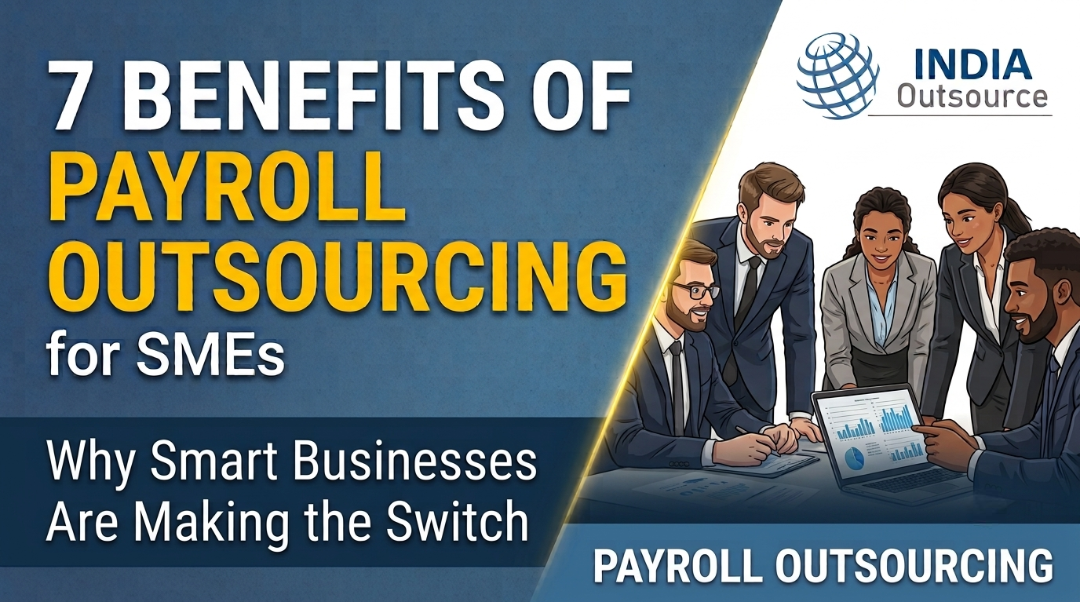
In this comprehensive guide, we’ll explore the 7 major benefits of payroll outsourcing for SMEs, as well as the information about why companies around the globe start using payroll outsourcing.
What is Payroll Outsourcing?
Payroll outsourcing involves outsourcing all aspects of payroll to a specialized payroll service provider.
These services typically include:
- Salary processing
- Payroll calculations
- Tax deductions
- Payslip generation
- PF & ESI management
- Income tax calculations
- Compliance with labor laws
- Attendance and leave integration
- Bonus and incentive calculations
- Employee reimbursements
- Statutory filings
- Payroll reporting
- Record management
SMEs don’t need to hire dedicated payroll personnel, buy expensive payroll software or constantly hire payroll professionals to keep them updated on compliance issues, they can simply outsource it to those who have experience to ensure payroll accuracy every time.
Why SMEs Should Consider Payroll Outsourcing
Small companies frequently have restricted budgets and slim staffs. Any time that is taken away from the business can be spent on administrative duties.
When implementing payroll outsourcing, your SME can:
- Focus on business growth
- Reduce operational complexity
- Lower administrative costs
- Improve payroll accuracy
- Stay legally compliant
- Increase employee trust
- Scale effortlessly
Let’s explore the top 7 benefits.
1. Significant Time Savings
Time is one of the most valuable assets for every entrepreneur.
Processing payroll isn’t a simple click of the mouse. It includes things like attendance, salary calculations, overtime, tax deductions, employee verification, payslips, and statutory reporting.
It can take days per month for businesses with dozens or hundreds of staff to process payroll.
SMEs save time and avoid repetitive administrative workloads by outsourcing payroll.
How time savings help businesses
- HR teams focus on talent management.
- Business owners concentrate on strategy.
- Managers improve productivity.
- Finance teams handle business planning instead of payroll calculations.
This increased efficiency directly contributes to business growth.
2. Reduced Payroll Costs
Numerous SMEs think that employing an in-house payroll executive will be cheaper than outsourcing.
However, payroll management internally may come with hidden costs like:
- Employee salaries
- Payroll software subscriptions
- System maintenance
- Staff training
- Compliance updates
- Office infrastructure
- Data storage
- IT support
These expenses can really build up.
These operating costs are distributed among several customers of the professional payroll provider and SMEs can benefit from enterprise class payroll services at a reduced cost.
Cost-saving benefits include
- Lower administrative expenses
- No software maintenance costs
- Reduced recruitment costs
- Fewer payroll errors
- Lower compliance penalties
- Predictable monthly pricing
Outsourcing can also be a much more cost-effective investment for the growing business.
3. Better Compliance with Tax and Labor Laws
There are regular changes in employment law.
Governments regularly update:
- Tax rules
- Minimum wage laws
- PF regulations
- ESI contributions
- Labor codes
- Leave policies
- Statutory reporting requirements
Failure to meet a deadline or deduct the wrong amount may lead to penalties, legal notices, audits and financial losses.
Professional payroll service companies keep up to date of changes in the legislation and make sure payroll is followed.
Compliance support includes
- Accurate tax deductions
- Government filing deadlines
- Statutory reporting
- Payroll documentation
- Audit-ready records
- Employee tax documentation
This greatly reduces legal risks for SMEs.
4. Improved Payroll Accuracy
The consequences of payroll mistakes are adverse to employee trust.
Even small mistakes can result in:
- Incorrect salaries
- Delayed payments
- Wrong tax deductions
- Missing reimbursements
- Payroll disputes
- Employee dissatisfaction
Human error is more likely to occur in manual payroll calculations.
The payroll automation system, multiple validations, and standardized procedures allow for accurate payroll processing by experienced payroll outsourcing companies.
Accurate payroll improves
- Employee confidence
- Financial reporting
- Tax calculations
- Compliance
- Payroll transparency
Regular and accurate payroll helps build a better employer brand.
5. Enhanced Data Security
Payroll information is extremely confidential and includes:
- Employee salaries
- Bank account details
- Tax identification numbers
- Government IDs
- Personal addresses
- Employment contracts
A data breach can lead to loss of sensitive information and harm the credibility of the business.
Reputable payroll service providers use high-quality security technologies, such as:
- Encrypted databases
- Multi-factor authentication
- Secure cloud infrastructure
- Access controls
- Automated backups
- Disaster recovery systems
A number of the providers also adhere to global security measures to protect client data.
SME’s do not tend to have the resources or the expertise to provide this much protection by themselves.
6. Scalability for Growing Businesses
As a business expands, it can bring about payroll challenges.
With the addition of more staff members, payroll becomes more complex.
Additional considerations include:
- Multiple departments
- Different salary structures
- Bonuses
- Incentives
- Shift allowances
- Remote employees
- Branch offices
- Contractor payments
As the number of employees grows, payroll outsourcing companies can easily adjust to their needs.
Whether your company has:
- 10 employees
- 50 employees
- 200 employees
- 1,000 employees
A reliable payroll partner will be flexible without having to invest in employees or technology.
Payroll is scalable, maintaining a smooth process through all phases of business growth.
7. Better Employee Experience
Staff want their salaries paid on time and in the correct amount.
Late or incorrect payroll has a negative impact on morale and trust.
Professional payroll services help to improve employee satisfaction by:
- On-time salary processing
- Accurate payslips
- Quick query resolution
- Transparent payroll records
- Self-service portals
- Tax documents
- Leave balance visibility
Having a positive payroll experience results in improved engagement among employees while also and strengthens workplace culture.
Satisfied employees are believed to be more productive, committed, and inspired.
Additional Advantages of Payroll Outsourcing
There are a number of other advantages to payroll outsourcing besides the main ones.
Access to Payroll Experts
Professional payroll experts are knowledgeable about intricate regulations and industry best practices.
Better Reporting
Businesses get comprehensive payroll reports for budgeting, forecasting and financial planning.
Reduced Administrative Burden
HR departments spend less time on paperwork, and more time on improving employee engagement.
Improved Business Continuity
Payroll runs smoothly even when employees are absent, resign, or in an emergency situation.
Technology Access
There are numerous payroll providers which supply advanced cloud-based platforms without any pricey software application purchases.
How to Choose the Right Payroll Outsourcing Provider
Not all payroll companies offers the same level of service.
Here are some things you must take into account when choosing a provider:
- Industry experience
- Client reviews
- Compliance expertise
- Data security standards
- Transparent pricing
- Scalability
- Customer support
- Payroll software capabilities
- Reporting features
- Integration with HR systems
A trustworthy provider becomes an extension of your business.
Common Myths About Payroll Outsourcing
Myth 1: Outsourcing is expensive
Reality: Most SMEs save money by outsourcing payroll.
Myth 2: Payroll outsourcing reduces control
Reality: Companies have complete oversight and outside processing of administrative tasks.
Myth 3: It’s only for large companies
Reality: Most often, SMEs are the ones that benefit most as they do not have many HR resources available..
Myth 4: Payroll data isn’t secure
Reality: These are enterprise-class security systems in place by reputable providers.
Is Payroll Outsourcing Right for Your SME?
If your business has any of the following, then payroll outsourcing is a great idea:
- Frequent payroll errors
- Compliance concerns
- Limited HR resources
- Business expansion
- High administrative workload
- Complex employee benefits
- Multiple salary structures
- Tight deadlines
If payroll consumes too much time and energy, outsourcing can provide immediate operational improvements.
Conclusion
Payroll refers not only to the act of paying employees but also to an important business process influences compliance, employee faith, operational effectiveness, and the company’s growth prospects.
For SMEs, internally managing payroll can become a costly and time-consuming process as the company grows. Thus outsourcing payroll can help businesses improve their efficiency and cut costs.
By partnering with a reliable payroll provider, entrepreneur can switch their focus to innovation and business growth while making sure that the payroll process still goes smoothly.
In the modern business world of stiff competition, outsourcing payroll is a necessity, not just a convenience.
Ready to simplify your payroll process and focus on growing your business?
Contact Us Today
FAQs
1. What is payroll outsourcing?
Payroll outsourcing refers to the practice of using a third-party payroll company to perform salary payments, tax deductions, payroll compliance, payslip generation, and statutory filings.
2. Is payroll outsourcing suitable for small businesses?
Yes, small enterprises stand to gain the most from payroll outsourcing because it diminishes administrative workload and increases compliance.
3. Does payroll outsourcing improve compliance?
Professional payroll service providers keep track of all the advancements in tax legislation and labor regulations so that their clients never get penalties or face legal problems.
4. Is outsourced payroll secure?
Payroll service providers who value your privacy will employ encryption, secure cloud storage, access controls and rigorous data confidentiality measures to safeguard your sensitive payroll information.
5. How much can SMEs save by outsourcing payroll?
Many SMEs realize they can save on administrative expenses, software costs, compliance issues and payroll related mistakes by outsourcing.