

Monthly Archives: July 2026

Payroll Services

Why Businesses Are Switching to Payroll Services: The Complete Guide to Saving Time, Reducing Costs, and Ensuring Compliance

Running a successful business involves much more than generating sales and serving customers. At the core of any successful business is a properly managed staff, and one of the most essential areas of staff management is payroll. Businesses have to adhere to tax laws, labor regulations, and reporting requirements, while employees demand correct and timely payment. Employees demand accurate and timely payments, and governments impose complex tax laws and labor regulations and reporting standards on businesses. Payroll Services.

Especially for small businesses, startups and fast growing companies, keeping track of payroll in-house is tougher than it has been in years. Payroll isn’t just about calculating payrolls. Now has tax deductions, employee benefits, overtime calculations, compliance reporting, leave management, direct deposits too, reimbursements, statutory contributions, and secure record keeping.

One simple payroll mistake could result in grumpy staff, fines, compliance problems, tarnished business reputation and needless extra administrative headaches.

This is why businesses across industries are increasingly switching to professional payroll services. Outsourcing payroll enables companies to streamline operations, reduce costs, improve compliance, protect sensitive employee data, and focus on strategic business growth instead of administrative tasks.

From small startup businesses to a growing e-commerce company, manufacturing firms to large multinational companies, payroll services have become a vital business solution a must have, rather than an option.

In this comprehensive guide, we’ll explore why businesses are making the switch to payroll services, the significant benefits they provide and how outsourcing payroll can enhance your organization’s productivity, efficiency and long-term success.

What Are Payroll Services?

Payroll services are specific solutions designed to handle all aspects of an employee’s payroll, on behalf of a business. These services help to ensure that employees’ pay is calculated correctly and on time, and that the company complies with tax requirements and labor laws.

A payroll service typically handles:

  • Employee salary calculations
  • Hourly wage processing
  • Overtime calculations
  • Bonuses and commissions
  • Tax deductions
  • Government filings
  • Employee reimbursements
  • Benefits administration
  • Leave calculations
  • Payslip generation
  • Direct bank transfers
  • Payroll reporting
  • Record management
  • Compliance monitoring
  • Year-end payroll documentation

Today, most payroll software vendors are also linking with accounting software, HR management systems, attendance monitoring solutions, and employee self-service portals, thereby building a payroll ecosystem.

Why More Businesses Are Outsourcing Payroll

Payroll is becoming more complex, which is why businesses are making the switch to payroll services. Manual payroll processing is challenging and ineffective due to new tax laws, changing labor laws, remote employees, hiring overseas workers and digital compliance standards.

These complexities are streamlined by professional payroll services providers, ensuring businesses can save time, money, and effort.

Let’s examine the major reasons behind this growing trend.

1. Saves Significant Time

One way or another, countless hours are spent processing payroll on a weekly basis.

Salaries calculation, verification of attendance, processing of deductions, correcting payroll discrepancies, preparing reports, and answering employee payroll questions can be a time-consuming process that may take days for HR to complete.

Businesses save from these repetitive tasks of administration by outsourcing payroll.

Rather than spending precious time on payroll calculations, internal teams spend their time on other things like:

  • Business development
  • Customer service
  • Employee engagement
  • Recruitment
  • Strategic planning
  • Revenue generation

Savings in time directly equate to gains in productivity throughout the company.

2. Reduces Payroll Errors

There are a lot of manual payroll mistakes.

Common payroll errors include:

  • Incorrect salary calculations
  • Missing overtime
  • Wrong tax deductions
  • Duplicate payments
  • Delayed payments
  • Incorrect employee classifications
  • Benefit calculation mistakes

Payroll mistakes have the potential to upset employees even when they are minor.

Professional payroll services minimize errors through multiple review processes, automated software, and validation systems.

Higher payroll accuracy means:

  • Happier employees
  • Fewer complaints
  • Better financial records
  • Reduced administrative corrections

3. Ensures Legal Compliance

Compliance with payroll is a major concern for businesses.

Every country has changing regulations regarding:

  • Income tax
  • Labor laws
  • Minimum wages
  • Overtime rules
  • Retirement contributions
  • Insurance deductions
  • Paid leave
  • Statutory reporting

Deadlines for compliance may be missed and result in:

  • Heavy penalties
  • Government audits
  • Legal disputes
  • Financial losses

Payroll services providers are constantly putting in the effort to keep businesses up to date with the latest laws and regulations.

4. Enhances Data Security

Payroll is highly sensitive data that includes:

  • Employee salaries
  • Bank account details
  • Social security information
  • Tax records
  • Personal identification
  • Employment contracts

Businesses can face the following risks with internal storage of payroll data:

  • Data breaches
  • Unauthorized access
  • Identity theft
  • Cyberattacks

Professional payroll companies spend a lot on:

  • Data encryption
  • Secure cloud storage
  • Multi-factor authentication
  • Regular security audits
  • Disaster recovery systems
  • Access controls

This greatly minimizes risks associated with security.

5. Lowers Operational Costs

Numerous companies think about outsourcing payroll as a costly endeavor.

But the cost of doing internal payroll is much higher in the real world.

Internal payroll expenses include:

  • Payroll software
  • HR salaries
  • Employee training
  • Compliance updates
  • IT infrastructure
  • Data security
  • Error correction
  • Administrative overhead

Payroll services bundle these expenses together into a fixed monthly cost, and remove the hidden costs of operating the system.

6. Improves Employee Satisfaction

Staff members are looking for correct and on-time wages.

Late payments cause employee discontent and dissatisfaction.

Professional payroll services can enhance employee experience by:

  • Timely salary payments
  • Accurate payslips
  • Online payroll access
  • Leave balance visibility
  • Tax documentation
  • Quick issue resolution

Satisfied employees are generally more engaged, productive, and loyal.

7. Supports Business Growth

As companies expand, so do the complexities of payroll.

Growth introduces:

  • New employees
  • Multiple locations
  • Different pay structures
  • Contractors
  • Freelancers
  • Bonuses
  • Department budgets

Payroll is more and more complicated by hand.

As a business grows, payroll providers can easily expand their services.

This flexibility helps to ensure sustainable growth without an additional burden of administration.

8. Access to Payroll Experts

Payroll experts have a distinct expertise in:

  • Tax regulations
  • Payroll compliance
  • Employment laws
  • Government reporting
  • Industry best practices

Rather than depending on the limited skills of their internal auditors, businesses can access the expertise of professionals who will ensure that the payroll process is accurate and compliant.

9. Better Reporting and Analytics

Modern payroll services offer comprehensive reports which make up management decisions.

Reports often include:

  • Payroll summaries
  • Department costs
  • Overtime expenses
  • Tax liabilities
  • Employee compensation
  • Benefits analysis
  • Labor cost forecasting

They provide information that enhances financial planning and budgeting.

10. Automated Payroll Processing

Payroll has undergone a transformation with the introduction of automation.

Advanced payroll software takes care of the following tasks automatically:

  • Salary calculations
  • Tax deductions
  • Attendance integration
  • Payslip generation
  • Direct deposits
  • Compliance reporting

Automation saves manual work and enhances speed and accuracy.

11. Easier Tax Filing

Tax filing is often one of the most stressful aspects of payroll.

Payroll providers manage:

  • Tax calculations
  • Government submissions
  • Tax forms
  • Filing deadlines
  • Employee tax documents

Compliance is reduced and businesses don’t have to deal with the last minute filing hassle.

12. Supports Remote and Hybrid Teams

The workforce is more spread out today than ever before.

Companies employ:

  • Remote workers
  • Freelancers
  • International contractors
  • Hybrid employees

Payroll services streamline payments in various regions and handle regional taxes, when relevant.

13. Better Integration with HR Systems

Today’s payroll software includes built-in connections to:

  • HR software
  • Attendance systems
  • Accounting software
  • Time tracking
  • Expense management
  • Employee portals

This not only minimizes repetitive data entry but also enhances the efficiency of your operations.

14. Reduces Administrative Burden

HR specialists have to spend too much time on answering payroll related queries.

Payroll services offer employee self-service portals where employees can access the following:

  • Payslips
  • Tax forms
  • Payment history
  • Leave balances
  • Personal information

This greatly alleviates the workload of HR.

15. Business Continuity

A resignation or an employee being unavailable to the payroll processing team internally can cause disruption in the payroll processes.

Professional payroll services provider have specialized teams and backup systems to keep payroll running smoothly.

When there’s a lot of business activity or an emergency, business continuity is especially crucial.

Industries That Benefit Most from Payroll Services

Payroll outsourcing can benefit nearly every industry, such as:

  • Small businesses
  • Startups
  • Retail companies
  • Healthcare organizations
  • Manufacturing businesses
  • Construction firms
  • Hospitality
  • Restaurants
  • IT companies
  • Educational institutions
  • Non-profit organizations
  • Professional service firms
  • E-commerce businesses
  • Logistics companies
  • Financial services

Signs Your Business Needs Payroll Services

Consider using payroll outsourcing when:

  • Payroll is time consuming.
  • Payroll mistakes happen all the time.
  • Compliance laws are getting harder to deal with!
  • Your business is expanding.
  • There are more complaints from employees.
  • HR teams are overwhelmed.
  • You have remote employees.
  • Payroll expenses are still on the rise.
  • The tax filing process is now stressful.
  • You want to improve efficiency.

How to Choose the Right Payroll Service Provider

When choosing a payroll services provider, consider:

  • Industry experience
  • Security standards
  • Compliance expertise
  • Customer support
  • Software integrations
  • Transparent pricing
  • Scalability
  • Automation features
  • Reporting capabilities
  • User-friendly employee portal

A trustworthy payroll partner must be able to assist you with your present needs and growth.

The Future of Payroll Services

Payroll is an ever-changing field of with technology.

Emerging trends include:

  • Artificial Intelligence
  • Machine Learning
  • Cloud-based payroll
  • Mobile payroll apps
  • Real-time payroll processing
  • Predictive payroll analytics
  • Automated compliance monitoring
  • Digital employee self-service
  • Integrated HR ecosystems

Businesses adopting these innovations are better positioned for long-term success.

Conclusion

Payroll is one of the most critical functions within any business, yet it is also one of the most time-consuming and compliance-intensive. As organizations continue to grow, expand across locations, and adapt to changing employment regulations, relying on manual payroll processes becomes increasingly risky and inefficient.

Switching to professional payroll services empowers businesses to streamline operations, reduce administrative burdens, enhance data security, improve employee satisfaction, maintain regulatory compliance, and make better use of internal resources. Rather than spending valuable time on repetitive payroll tasks, companies can redirect their energy toward innovation, customer service, and sustainable growth.

In today’s fast-paced business environment, payroll outsourcing is more than a cost-saving measure—it’s a strategic investment that helps organizations operate with greater accuracy, efficiency, and confidence.

Ready to Simplify Your Payroll?

Contact Us Now

 FAQs

1. Why should businesses outsource payroll?

Businesses that outsource their payroll gain several benefits: time savings, error reduction, increased compliance, additional security, decreased admin expenses, and business growth.

2. Are payroll services suitable for small businesses?

Yes. Small businesses can be the biggest winners as they don’t need to hire payroll employees or the high cost of payroll software.

3. Do payroll services improve compliance?

Absolutely. Payroll software vendors remain current with new tax laws and labor rules, ensuring businesses don’t find themselves liable for expensive penalties and compliance matters.

4. Can payroll services handle remote employees?

Yes. Most modern payroll providers support remote, hybrid, and multi-location workforces while ensuring accurate payments and compliance.

5. Is outsourcing payroll secure?

Reputable payroll providers use advanced encryption, secure cloud infrastructure, access controls, and regular security audits to protect sensitive employee information.
In-House vs. Outsourced Tax Services

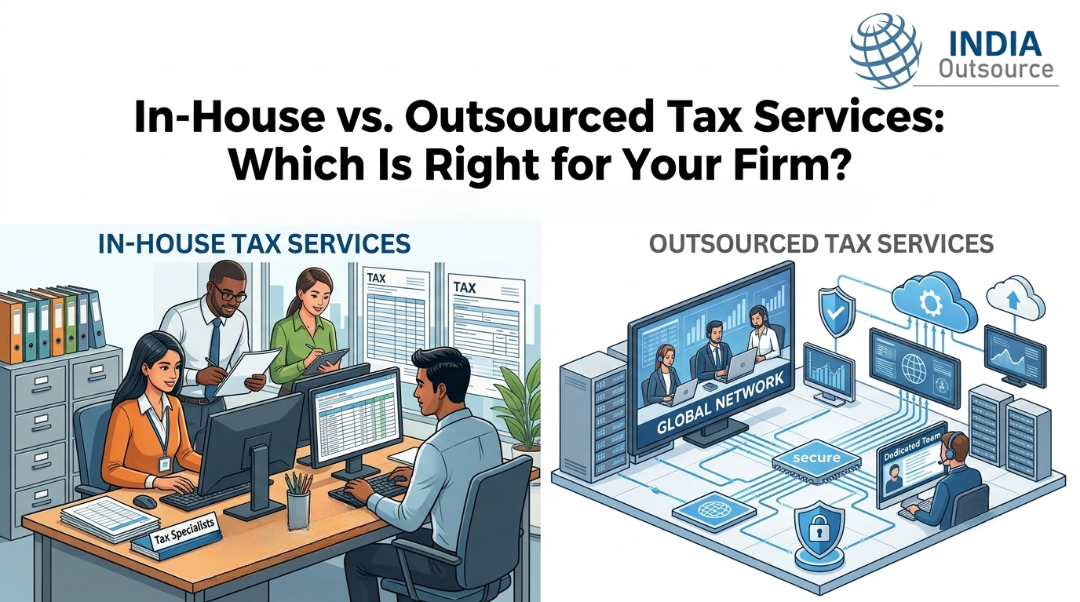
In-House vs Outsourced Tax Services: Which Is Better?

Tax management has grown more complicated than ever! Whether it’s tax changes, compliance guidelines, or more stringent financial reporting, businesses have to ensure that all their tax-related processes are conducted with accuracy. There could be penalties, audits, reputation or financial loss due to even a minor mistake. In-House vs Outsourced Tax Services.

This raises an important question for growing businesses:

Should you have in-house tax staff or hire experienced tax pros to outsource tax services?

Not everything is clear cut. An internal tax team allows for more control and direct oversight, but an outsourced team can offer increased expertise, reduced operational costs, cutting-edge technology, and scalability options that many businesses may not be able to replicate.

From a startup to an SME, accounting firm, CPA practice to large enterprise, the right tax management strategy can have an immediate effect on profitability, compliance, efficiency, and long-term growth.

Here’s a comprehensive guide to comparing in-house and outsourced tax services, exploring the pros and cons of both, contrasting costs, and deciding which option is more suitable for your firm’s needs.

What Are In-House Tax Services?

In-house tax services include having full-time staff in your office to handle your tax needs.

A typical internal tax department may include:

  • Tax Managers
  • Tax Accountants
  • Financial Controllers
  • Compliance Specialists
  • Payroll Tax Experts
  • Tax Analysts

These experts are your employees only and handle all of the tax planning, filing, reporting, audit and regulatory compliance for your business.

Responsibilities of an In-House Tax Team

An internal tax department usually manages:

  • Corporate tax preparation
  • Sales tax compliance
  • Payroll tax reporting
  • GST/VAT compliance
  • Tax planning strategies
  • Financial reporting
  • Tax audits
  • Regulatory compliance
  • Internal documentation
  • Risk management

The company has the responsibility of recruiting, training, managing and retaining these professionals.

What Are Outsourced Tax Services?

Outsourced tax services are based on a third party accounting/tax service working on your tax obligations.

Rather than having a large in-house tax team, businesses partnering with an experienced tax team of remote workers who use cloud-based accounting software that is secure.

These firms often provide:

  • Tax preparation
  • Tax filing
  • Bookkeeping
  • Payroll processing
  • Corporate tax planning
  • Sales tax management
  • Audit support
  • Financial reporting
  • CFO advisory services
  • International tax compliance

Outsourcing is a flexible and budget-friendly option for businesses, as they only pay for the services they need.

In-House vs. Outsourced Tax Services: Quick Comparison

Feature In-House Tax Team Outsourced Tax Services
Cost High Lower
Hiring Required Yes No
Employee Benefits Required Not Required
Training Costs High None
Compliance Expertise Limited Extensive
Scalability Difficult Easy
Technology Investment Required Included
Availability Business Hours Often Extended Support
Risk Management Internal Responsibility Shared with Experts
Access to Specialists Limited Broad Expertise
Business Focus Administrative Burden Focus on Growth

Advantages of In-House Tax Services

1. Greater Control

Internal employees are those that are working within your organization, and your management can keep a close watch on the tax processes.

This kind of control is useful for companies that have specific functions or delicate financial details.

2. Immediate Communication

The tax team is on-site or part of your structure, which means that communication is more effective and rapid.

Managers can easily discuss tax strategies, financial planning, immediate compliance issues, etc. without having to coordinate with an outside provider.

3. Better Understanding of Company Operations

Internal employees learn a lot about you’re:

  • Business model
  • Financial structure
  • Revenue streams
  • Industry regulations
  • Internal workflows

This knowledge can be helpful when making decisions on tax planning for the company.

4. Dedicated Resources

An in-house tax department works solely for your company, whereas outsourced tax departments work for several firms.

This focused effort can be of great value to businesses with especially complex tax situations.

Disadvantages of In-House Tax Services

High Operational Costs

The internal tax department can be very costly.

Costs include:

  • Salaries
  • Bonuses
  • Health insurance
  • Retirement benefits
  • Office space
  • Recruitment
  • Software licenses
  • Hardware
  • Employee training

These expenses can be a burden for many businesses.

Recruitment Challenges

It’s harder to find professionals with experience in taxation.

Businesses may invest months in finding qualified candidates but still have to deal with larger businesses paying higher salary.

Limited Expertise

A single inside team might not have an in-depth understanding of:

  • International taxation
  • Multi-state compliance
  • Industry-specific tax laws
  • Mergers and acquisitions
  • Cross-border tax planning

But complex issues could still call for outside consultants.

Continuous Training Requirements

Tax regulations constantly changing.

Businesses must invest in ongoing employee education to remain compliant with changing legislation.

Advantages of Outsourced Tax Services

Significant Cost Savings

Cost reduction is one of the most important reasons that companies outsource their tax services.

Businesses eliminate expenses related to:

  • Recruitment
  • Employee salaries
  • Benefits
  • Office infrastructure
  • Software purchases
  • Professional training

Rather, they only pay for the services they require.

Access to Experienced Tax Professionals

Outsourced providers have a group of experts working in a variety of industries and jurisdictions.

This means your business benefits from:

  • Senior tax advisors
  • CPAs
  • Compliance experts
  • Audit specialists
  • Payroll professionals
  • International tax consultants

Without employing each one separately.

Better Compliance

Specialist tax companies keep up to date on ever-evolving tax legislation.

They proactively monitor:

  • Legislative changes
  • Filing deadlines
  • Compliance requirements
  • Reporting standards

This greatly reduce the danger of penalties and audits.

Scalability

Business needs change over time.

When you’re looking to expand your business into new markets, buy another business, or during tax season, you can add services without needing to hire more people, outsourced providers can simply scale it up.

Advanced Technology

The vast majority of outsourcers will be working with cutting-edge cloud accounting solutions and automation.

Benefits include:

  • Secure document sharing
  • Real-time reporting
  • Automated workflows
  • Digital tax filing
  • Data backups
  • Improved accuracy

You can benefit from enterprise-level tech without the enterprise price tag.

Improved Business Focus

Compliance with the tax law takes up significant management time.

Outsourcing allows business leaders to focus on:

  • Growth
  • Customer acquisition
  • Product development
  • Sales
  • Strategic planning

Rather than administrative duties.

Disadvantages of Outsourced Tax Services

Less Direct Control

For some business owners, it’s preferable to oversee tax things themselves.

It may be necessary to set up communication and reporting with an external provider.

Initial Transition

Transferring financial data to a different provider may take some time.

But, when a business is an expert in outsourcing, they usually have a detailed procedure for getting new hires up and running that lessens the chaos.

Data Security Concerns

This is a concern that many businesses have when it comes to sharing a part of their finances that is sensitive.

A good outsourcing company will handle this by:

  • Encrypted systems
  • Secure cloud platforms
  • Multi-factor authentication
  • Confidentiality agreements
  • Regulatory compliance
  • Regular cybersecurity audits

Cost Comparison

In-House Costs

Typical expenses include:

  • Employee salaries
  • Payroll taxes
  • Benefits
  • Recruitment fees
  • Software subscriptions
  • Office equipment
  • Training programs
  • Management overhead

These reoccurring costs can be significant, particularly for small and mid-size businesses.

Outsourcing Costs

Businesses generally pay:

  • Monthly service packages
  • Project-based pricing
  • Hourly consulting fees
  • Seasonal tax preparation costs

But, on average, outsourcing can offer substantial benefits from a cost-cutting standpoint, as well as access to more extensive expertise.

Which Businesses Should Choose In-House Tax Services?

If your business: An internal tax department might be needed if you:

  • Has thousands of employees
  • Operates in highly regulated industries
  • Requires daily tax decision-making
  • Has complex multinational operations
  • Can support the high costs of maintaining a dedicated tax department

Which Businesses Benefit Most from Outsourced Tax Services?

Outsourcing is ideal for:

  • Startups
  • Small businesses
  • Mid-sized companies
  • CPA firms
  • Accounting firms
  • E-commerce businesses
  • Healthcare organizations
  • Manufacturing companies
  • Law firms
  • Real estate businesses
  • Non-profit organizations

These companies can enjoy the advantages of specialized expertise without the expense of a dedicated tax department.

Key Factors to Consider Before Making Your Decision

When deciding on one of the two options, in-house or outsourced tax, consider the following:

Business Size

Outsourcing might be more beneficial for smaller companies, whereas larger businesses may need their own teams.

Budget

Before making a decision, work out the actual expenses of hiring, training, benefits, software and infrastructure.

Complexity

International businesses or those operating in multiple countries will likely need a particular level of tax expertise, which outsourcing providers can provide.

Growth Plans

Growing businesses require flexibility in their tax structure that can grow with them without significant recruitment.

Technology Requirements

Decide whether your company is ready to invest in cutting-edge accounting software and secure tax management systems.

Hybrid Approach: The Best of Both Worlds

What many businesses do is to have a small finance team internally and outsource specialized tax services.

This approach offers:

  • Internal oversight
  • External expertise
  • Lower operational costs
  • Better compliance
  • Greater flexibility
  • Access to specialized advisors when needed

It is becoming a very common method among expanding enterprises to manage and be efficient.

Conclusion: Which Option Is Right for Your Firm?

When it comes to choosing between in-house and outsourced tax services, there’s no one right or wrong answer. It’s up to you to choose the right one depending on your business size, budget, operational complexity, compliance requirements and long-term goals.

For those that want to have full control, and can support a dedicated tax function, an in-house tax team might be the best choice. For many small to medium-sized businesses, outsourcing offers even more value as a way to save money, gain specialized expertise, ensure compliance, leverage advanced technology, and scale with the business.

The bottom line is that you’re not just cutting costs—you’re creating a tax management strategy that helps your business grow sustainably, reduce risk and let your team focus on doing what they do best: growing your business.

Ready to Simplify Your Tax Management?

Contact Us Today

 FAQs

  1. What is the difference between in-house and outsourced tax services?

In-house tax services are handled by full-time employees within a company, while outsourced tax services are managed by an external accounting or tax firm. Outsourcing provides access to specialized expertise, lower operational costs, and greater scalability, whereas in-house teams offer more direct control over tax processes.

  1. Is outsourcing tax services more cost-effective?

Yes. Often, outsourcing tax services will cost less since the business does not incur the cost of hiring staff, salaries, employee benefits, office space, software, etc., and there is no need to train employees. Only those services that are needed are paid for by companies.

  1. Which businesses should outsource tax services?

The benefits of outsourced tax services are most advantageous for small businesses, startups, CPA or accounting firms, ecommerce businesses, healthcare organizations, manufacturers and growing businesses, as they offer lower costs, expert support and are also more scalable.


  1. Are outsourced tax services secure?

Yes. Reputable tax service providers use encrypted cloud platforms, secure file-sharing systems, multi-factor authentication, and strict confidentiality policies to protect sensitive financial and tax information.

  1. Can outsourced tax professionals handle tax audits?

Absolutely. Numerous outsourced tax agencies offer audit preparation, documentation, representation with tax authorities, tax compliance reviews, and audit support after audit services to assist businesses in managing tax audits effectively.

  1. What are the advantages of an in-house tax team?

An in-house tax team provides more control over financial operations, speedy internal communication, better understanding of company operations and support in dealing with complex day-to-day tax issues.

  1. What are the benefits of outsourcing tax services?

Outsourcing provides access to experienced tax professionals, reduces operational costs, improves tax compliance, minimizes filing errors, offers advanced technology, and allows businesses to focus on core operations.

  1. How do I choose between in-house and outsourced tax services?

Consider factors such as your business size, budget, tax complexity, compliance requirements, growth plans, and available internal resources. Smaller and growing businesses often benefit more from outsourcing, while large enterprises may prefer maintaining an in-house tax department.