Monthly Archives: June 2026

Management Accounting Services

7 Signs Your Business Needs Professional Management Accounting Services

For business owners today, making money and attracting customers is not the only point of the business, it’s about making the right financial decisions at the right time. Many businesses don’t fail when there is no money coming in, they fail when there is no financial clarity.

When numbers are not properly tracked, analyzed, and interpreted, business owners find themselves making decisions based on instead of business plans. That’s where professional management accounting services come into play.

While bookkeeping primarily involves recording financial transactions, management accounting is more about analyzing the financial information and using its insights to make informed decisions for better profitability, waste minimization, and long-term business growth. It converts data into business intelligence.

If you aren’t sure of your business’s need for this type of financial information, the following seven signs will help you determine if it’s necessary.

1. You Struggle to Understand Your Financial Position Clearly

When you find yourself asking yourself questions such as:

  • “Is it really profitable for us??”
  • “Where is all the money going?”
  • ““Do we have the resources to grow at this time?

If so, you are missing financial visibility in your business.

Management accounting provides:

  • Real-time financial dashboards
  • Profit & loss breakdown by department or product
  • Cash flow forecasting
  • Cost behavior analysis

You don’t have to wait until year end to get financial clarity, you get it all the time and make better, faster decisions.

👉 👉 If you can’t explain your current financial situation in less than 2 minutes, you need professional support.

2. Poor Cash Flow Management Is Affecting Operations

One of the top reasons businesses fail, even those that are successful, is cash flow problems.

Warning signs include:

  • Delayed supplier payments
  • Constant short-term borrowing
  • Inability to manage payroll smoothly
  • Unpredictable cash shortages

Here are some of the things a professional management accounting services can assist you with:

  • Forecast incoming and outgoing cash
  • Identify cash leaks
  • Optimize payment cycles
  • Maintain liquidity buffers

This not only helps your company survive, but continue to run without the strain of financial stress.

3. You Are Making Business Decisions Based on Guesswork

Without data, your business is operating blind when making decisions on pricing, hiring, expansion, and marketing.

Management accountants provide:

  • Cost-volume-profit analysis
  • Break-even analysis
  • Product/service profitability insights
  • Budget vs actual performance tracking

This makes for decision-making based on numbers, and not on assumption.

For example:
Instead of asking “Should we hire more staff?”, you’ll know:

  • Whether current demand supports it
  • What the exact cost impact will be
  • How it affects profitability

4. Your Profit Margins Are Declining or Unstable

Revenue growth means nothing if profit margins are shrinking.

Common causes include:

  • Rising operational costs
  • Poor pricing strategies
  • Inefficient processes
  • Untracked overhead expenses

Management accounting identifies:

  • High-cost areas in your operations
  • Underperforming products or services
  • Pricing gaps hurting profitability

With this insight, businesses can optimize pricing, reduce waste, and improve margin stability.

5. You Don’t Have a Clear Budgeting and Forecasting System

Businesses run without direction when they don’t budget.

Signs include:

  • Overspending in multiple departments
  • No financial targets or KPIs
  • Surprise expenses affecting operations
  • No future financial planning

For the first time, you will get a practical introduction to the field of management accounting.

  • Annual and quarterly budgeting
  • Rolling forecasts
  • Scenario planning (“what-if” analysis)
  • Department-wise financial targets

This helps to establish a financial plan that ensures your business is moving towards growth objectives.

6. You Are Expanding but Lacking Financial Control

When companies grow it’s great, but if they don’t have financial structure it’s hazardous.

If you are:

  • Opening new locations
  • Launching new products
  • Entering new markets
  • Hiring rapidly

…but don’t have structured financial systems, you are exposed to major risks.

Management accounting ensures:

  • Expansion is financially sustainable
  • Costs are controlled during scaling
  • Investment decisions are data-driven
  • Risk exposure is minimized

Transforms growth from disorganized expansion to strategic scaling.

7. You Spend Too Much Time Trying to Understand Your Own Numbers

As a business owner, your time should be spent on strategy—not spreadsheets.

If you find yourself:

  • Spending hours analyzing Excel sheets
  • Confused by accounting reports
  • Relying on guesswork to interpret data
  • Avoiding financial review altogether

…if it is a good indication that you need expert help.

Management accountants:

  • Simplify complex financial data
  • Create easy-to-read reports and dashboards
  • Highlight key performance indicators (KPIs)
  • Provide actionable recommendations

This will help you concentrate on what’s important; building your business.

Why Professional Management Accounting Services Matter

These services don’t just solve issues, they also help you create a financially savvy business.

Benefits include:

  • Better decision-making
  • Improved profitability
  • Reduced financial risks
  • Stronger cash flow control
  • Scalable business systems
  • Increased investor confidence

In today’s competitive environment, financial clarity is not optional—it’s a necessity.

Conclusion

If you see just two or more of these indicators, you already have some financial blind spots in your business that may be stunting growth or adding unnecessary risk.

Professional management accounting services don’t just “manage numbers”—they transform them into a powerful tool for strategic success.

One of the biggest disparities between floundering businesses and scalable enterprises is financial intelligence.

Turn Your Numbers into Growth

Start Smarter Financial Decisions Today!


FAQs


1. What are management accounting services?

Management Accounting services encompass the process of interpreting financial information and making informed business decisions to boost profitability and chart a course for future growth.

2. How is management accounting different from bookkeeping?

Bookkeeping records financial transactions, while management accounting interprets and analyzes that data for strategic business decision-making.

3. Who needs management accounting services?

Small businesses, startups, and growing companies that want better financial control, budgeting, and profitability insights need these services.

4. Can management accounting help improve cash flow?

Yes. It assists in predicting cash flow, detecting cash leaks, and fine-tuning the finances to ensure business liquidity.

5. Is management accounting only for large companies?

No, even a small and medium business can make good use of accounting for management to enable their business to be scaled efficiently and without financial risks.

Accounts Finalisation

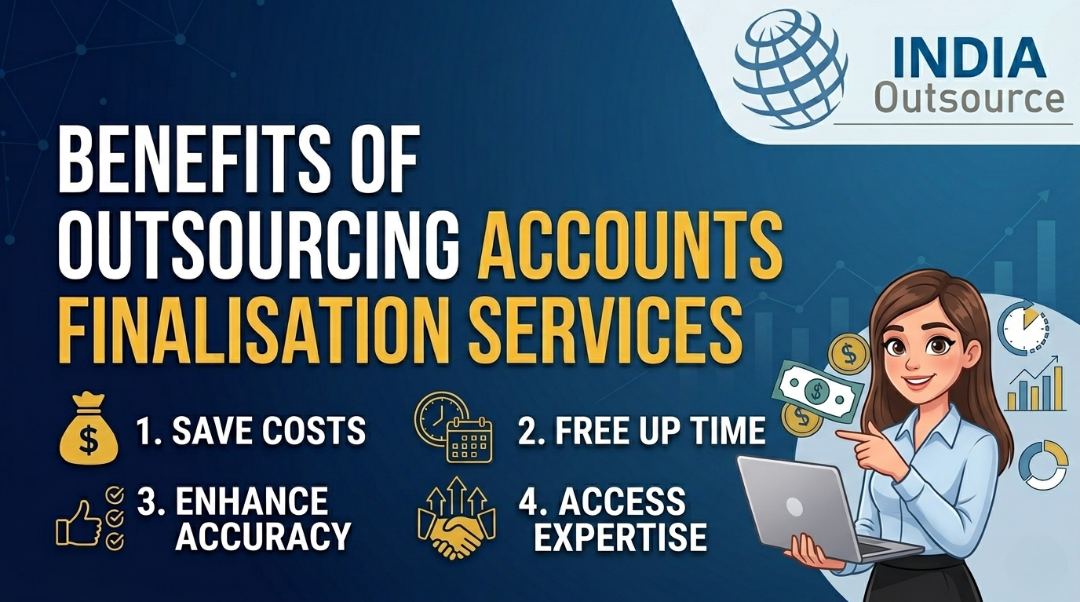
Benefits of Outsourcing Accounts Finalisation Services: A Complete Guide for Modern Businesses

In the current very competitive business climate businesses are always looking for opportunities to make operations more efficient and to cut costs associated with running a business while also making sure that their financial records are accurate. One of the most important parts of managing your business’s finances is ensuring that the accounts have been finalised in the correct manner. Accounts finalisation is the process of making sure that your company’s financial statements are correct, comply with regulations and can be used for reporting, auditing and making strategic decisions.

Managing accounts finalisation in-house can be exhausting, consume a lot of resources and create errors, particularly for businesses that are experiencing rapid growth and include various or complex transactions. As a result, outsourcing the accounts finalisation has become an avenue that many businesses are now looking to utilize and has changed the game.

Utilising the services of experienced accounting professionals allows businesses to create a more organized financial process, helps ensure that they are in compliance with applicable laws and regulations, provides businesses with an opportunity to benefit from the expertise of accounting professionals and allows business owners to focus on the core operations of their businesses. Businesses of all sizes (including start-ups, small and medium firms, accounting firms and enterprises) can greatly benefit from outsourcing the finalisation of their accounting as it provides businesses with the ability to improve on their financial management processes and alleviate other operational issues.

In this guide, we will look at and discuss the benefits of outsourcing accounts finalisation, what significance businesses are beginning to see in this option and how using this method can assist businesses with significant long-term growth and profit potential.

What Are Accounts Finalisation Services?

Accounts finalisation is the process of reconciling, adjusting and closing financial records at the close of an accounting period. It entails the preparation of valid financial statements that show the financial status of a business.

Typical accounts finalisation services include:

  • Preparation of Profit & Loss Statements
  • Balance Sheet Preparation
  • Trial Balance Review
  • Bank Reconciliation
  • Fixed Asset Verification
  • Journal Adjustments
  • Accrual and Prepayment Adjustments
  • Financial Reporting
  • Tax Provisions and Compliance Checks
  • Audit Support Documentation

Such activities are vital in keeping the process open, ensuring adherence and assisting in making informed business decisions.

Why Businesses Are Choosing to Outsource Accounts Finalisation Services

Businesses are increasingly turning to outsourced accounting services because of the difficulties they face in keeping an in-house finance team. Outsourced accounting professionals are becoming more and more popular with companies that need to concentrate on growing their business with complex financial tasks.

By outsourcing you can get flexible, scalable, save money and ensure access to highly skilled personnel without the need to hire or train your own.

Top Benefits of Outsourcing Accounts Finalisation Services

  1. Significant Cost Savings

Reducing operational costs is one of the key reasons why businesses are outsourcing account finalisation services.

Maintaining an in-house accounting department involves:

  • Salaries and employee benefits
  • Recruitment costs
  • Training expenses
  • Software licensing fees
  • Infrastructure costs
  • Compliance management expenses

By outsourcing, many of these expenses are avoided because you get professional accounting professionals who have the experience needed at a much reduced cost to a full-time in-house staff.

Key Cost Advantages:

  • Reduced payroll expenses
  • No recruitment costs
  • Lower infrastructure investments
  • Pay only for required services
  • Better resource allocation

Businesses can redirect these savings toward expansion, innovation, and customer acquisition.

  1. Access to Experienced Accounting Professionals

Accounts finalisation requires specialized in-depth knowledge of accounting principles, tax regulations, financial reporting standards, and compliance requirements.

The Outsourcing providers employ qualified accountants and finance experts who possess extensive industry experience and stay updated with changing regulations.

Benefits Include:

  • Expert financial oversight
  • Industry-specific knowledge
  • Accurate financial reporting
  • Improved compliance management
  • Reduced risk of accounting errors

This knowledge will help you to make your financial statements accurate and professional.

  1. Improved Accuracy and Reduced Errors

Errors in your finances can have significant repercussions such as compliance problems, tax penalties, audit hassles, and bad business decisions.

Outsourced accounting firms generally have standardized quality control routines, multiple levels of reviews and advanced accounting technologies to guarantee correctness.

Accuracy Improvements:

  • Thorough account reconciliation
  • Error detection and correction
  • Consistent review procedures
  • Standardized accounting practices
  • Enhanced data integrity

As a result, businesses benefit from reliable financial information that supports informed decision-making.

  1. Enhanced Regulatory Compliance

There are still evolving financial regulations and accounting standards. Compliance needs to be monitored continuously and demands expertise.

Outsourced accounts finalisation providers are well-versed in:

  • Accounting standards
  • Tax regulations
  • Corporate reporting requirements
  • Industry-specific compliance obligations
  • Audit preparation requirements

Compliance Benefits:

  • Reduced risk of penalties
  • Timely reporting
  • Proper documentation
  • Regulatory adherence
  • Audit readiness

This ensures your business remains compliant while minimizing legal and financial risks.

  1. Faster Financial Reporting

Financial reporting is critical to an effective business management process if it is timely. If accounts aren’t finished on time, then strategic planning and decision making may be affected.

By outsourcing, companies can leverage resources and processes to speed up the month-end and year-end closing cycles.

Faster Reporting Leads To:

  • Quicker decision-making
  • Improved financial visibility
  • Better cash flow management
  • Enhanced stakeholder confidence
  • Timely tax filing

Companies can access financial data in real-time to enable proactive business management.

  1. Increased Focus on Core Business Activities

Internal financial operations may consume critical time and resources that could otherwise be spent on generating revenue.

With outsourcing of accounts finalisation services, business owners and management teams can concentrate on the following:

  • Business development
  • Customer acquisition
  • Product innovation
  • Market expansion
  • Strategic planning

Instead of spending countless hours managing accounting processes, leaders can concentrate on driving growth and profitability.

  1. Scalability and Flexibility

The complexities of accounting needs increase as a business grows. Additional employees are expensive and need to be trained.

Hired accounting companies offers scalable solution that fits with the needs of the business.

Scalability Benefits:

  • Support during peak periods
  • Flexible service packages
  • Easy expansion of accounting functions
  • No staffing limitations
  • Customized solutions

Whether your business is experiencing rapid growth or seasonal fluctuations, outsourcing provides the flexibility needed to manage financial operations effectively.

  1. Access to Advanced Accounting Technology

Modern accounting relies heavily on technology for efficiency, accuracy, and reporting.

Outsourced firms often invest in:

  • Cloud accounting software
  • Financial analytics tools
  • Automation platforms
  • Data security systems
  • Reporting dashboards

Technology Advantages:

  • Automated processes
  • Real-time reporting
  • Enhanced security
  • Reduced manual workload
  • Better financial insights

Companies can benefit from enterprise level accounting technology without heavy investments.

  1. Improved Data Security and Confidentiality

Financial data is one of the most delicate business information. The security of this data is essential to trust and compliance.

Anybody offering good outsourcing should have the following security measures in place:

  • Data encryption
  • Secure cloud storage
  • Access controls
  • Regular backups
  • Compliance with data protection standards

This can drastically minimise data breaches and unauthorised access.

  1. Better Audit Preparedness

The audit process can be stressful if the financial records are lacking or aren’t well-maintained.

Professional accounts finalisation services ensure:

  • Accurate documentation
  • Organized financial records
  • Compliance-ready reports
  • Proper reconciliations
  • Transparent financial statements

Audit Benefits:

  • Smoother audit processes
  • Reduced audit costs
  • Faster audit completion
  • Increased confidence among stakeholders

Audits can be conducted with more confidence and with less disruption to businesses.

  1. Strategic Financial Insights

Outsourced accounting services go beyond just financial statements and can offer valuable insights that can help businesses grow.

These insights may include:

  • Profitability analysis
  • Cost reduction opportunities
  • Cash flow forecasting
  • Budgeting recommendations
  • Financial performance evaluation

Access to strategic financial guidance enables businesses to make informed decisions that improve long-term profitability.

  1. Reduced Business Risk

Businesses can face major risks when there are errors in the accounts, deadlines are missed, and compliance is not met.

Outsourcing minimizes these risks through:

  • Experienced professionals
  • Proven processes
  • Regulatory expertise
  • Ongoing monitoring
  • Internal quality controls

Ultimately, this means improved finances and lower risk of costly errors.

Industries That Benefit from Outsourced Accounts Finalisation Services

Outsourced accounting support can be beneficial for virtually every industry, including:

Manufacturing

  • Inventory management
  • Cost accounting
  • Financial reporting

Retail and E-commerce

  • Revenue tracking
  • Tax compliance
  • Multi-channel reporting

Healthcare

  • Regulatory compliance
  • Financial statement preparation

Real Estate

  • Property accounting
  • Investment reporting

Professional Services

  • Project profitability analysis
  • Financial planning

Startups

  • Investor reporting
  • Budget management
  • Growth-focused financial support

How to Choose the Right Accounts Finalisation Service Provider

Here are some things to think about when choosing an outsourcing partner:

Industry Experience

Choose a provider who has experience in your industry.

Qualified Professionals

Make sure they hire certified finance professionals and accountants.

Technology Capabilities

Check their use of the latest accounting software and automation.

Security Standards

Review their data protection measures.

Scalability

Establish that they will be able to contribute to future business expansion.

Client Reviews and Reputation

Critically analyse testimonials, case studies and references.

Choosing the right one will have a great influence on the development of your financial operations.

The Future of Outsourced Accounting Services

Businesses increasingly adopting digital transformation, the outsourcing of accounts finalisation services is likely to grow even more in the future.

Emerging trends include:

  • Artificial Intelligence in accounting
  • Automated financial reporting
  • Cloud-based collaboration
  • Predictive financial analytics
  • Enhanced cybersecurity measures

Companies that utilize outsourced financial knowledge will have a better opportunity to weather market shifts and realize long-term growth.

Conclusion

Outsourcing the accounts finalisation services is more than just a way to save money on your bottom line; it is a great business strategy that will help your company to further its accountability, comply with regulations, operate efficiently, and develop better strategic decisions. By partnering with experienced professionals for your company’s accounting needs will give your business access to a wealth of specialised knowledge, as well as state-of-the-art technologies, improved reporting functions, and the ability to provide scalable financial support.

Whether your organisation is a start-up looking to streamline its operations, a firm looking to increase capacity to meet its customer’s needs or an established organisation looking for ways to improve its financial performance, outsourcing accounts finalisations can offer a company a competitive edge.

Outsourcing provides a business with the benefit of being able to reduce costs while enhancing business compliance capabilities, as well as providing quicker turnaround times and better overall quality of work products; all of which are reasons to consider outsourcing as one of the best strategic financial management decisions for any modern organisation.


Ready to simplify your financial processes and improve reporting accuracy?

Contact Us Today

FAQs

1. What are accounts finalisation services?

Accounts finalisation services involve reviewing, reconciling and preparation of the financial statements including balance sheet, profit and loss account, cash flow statements etc. to ensure the reporting of financial statements and regulatory compliances are accurate.

2. Why should businesses outsource accounts finalisation services?

To save on operating expenses, enhance financial precision, ensure compliance, gain accounting expertise, and concentrate more on the main business operations, businesses outsource the accounts finalisation services.

3. How does outsourcing accounts finalisation reduce costs?

Outsourcing eliminates expenses related to hiring, training, employee benefits, software investments, and infrastructure, allowing businesses to access professional accounting support at a lower cost.

4. Is outsourcing accounts finalisation secure?

Yes. A good outsourcing company will employ sophisticated security solutions such as the use of the data encryption, secure cloud storage, access controls, and adherence to international data protection standards.

5. What industries benefit from outsourced accounts finalisation services?

Account finalisation services can be valuable for various industries, including manufacturing, retail stores, e-commerce, healthcare, real estate, professional services, startups, and financial institutions.

6. Can outsourced accounts finalisation improve compliance?

Yes. Experienced accounting professionals stay updated with accounting standards, tax regulations, and reporting requirements, helping businesses maintain full compliance and avoid penalties.

7. What is included in accounts finalisation services?

Accounts finalisation services typically include trial balance review, bank reconciliations, journal adjustments, financial statement preparation, tax provisions, compliance checks, and audit support.

8. How does outsourcing improve financial reporting accuracy?

Errors are discovered, accounts are reconciled, and financial reports are created through well-defined procedures, quality control measures, and high-tech accounting software while outsourced accounting experts work.

9. Can small businesses outsource accounts finalisation services?

Absolutely. Small businesses can gain most from outsourcing services since they can obtain expert accounting assistance without the expenses that would otherwise come with keeping a full-time in-house finance team.

10. How do I choose the right accounts finalisation service provider?

Find a provider that has industry experience, qualified accountants, robust data security, cutting-edge accounting technology, scalability, and positive client feedback.

Tax Return Outsourcing Services

Why Companies and Accounting Firms Choose Tax Return Outsourcing Services in India

The Strategic Shift Toward Tax Return Outsourcing: Why India Has Become the Global Hub

In today’s highly competitive business environment, companies are always trying to find new ways to decrease costs, optimize their operation, improve efficiencies, and focus on core competencies; tax preparation and the filing of tax returns are important functions for businesses, but these functions also require a substantial amount of time, money, and expertise. Because of the complexity of tax law, in different areas/tax jurisdictions, companies and accounting firms in many parts of the world are outsourcing their tax return preparation and filing services to India as a way of gaining a competitive advantage. Tax Return Outsourcing Services.

India has become one of the top global countries for outsourcing tax and accounting work of any kind, including providing tax services to CPA firms, Accounting firms, Tax Preparation Firms, Bookkeeping Firms, and Multinational Companies. Due to an abundance of a relatively cheap but highly educated workforce, advanced technology developed for this purpose, considerable experience in the field, and a cost-effective approach to doing tax returns; India is an extremely well-suited location for outsourcing tax preparation.

In addition to providing the usual services such as individual and corporate income tax returns, as well as all types of partnership tax returns and international tax compliance, Indian firms are also providing businesses with the necessary tools to build better, more efficient and compliant tax operations that will be profitable as they grow.

This article will discuss what companies and accounting firms are looking for when they use tax return outsourcing services from India and how tech return outsourcing can change the way tax operations are conducted forever.

What Are Tax Return Outsourcing Services?

Tax return outsourcing services are when a business sends out the preparation of the company’s taxes, filing of taxes, compliance of taxes, reviewing of taxes, and all other accounting functions related to taxes to a specialized third party.

These services typically include:

  • Individual tax return preparation
  • Corporate tax return preparation
  • Partnership tax returns
  • Trust and estate tax returns
  • Sales tax filing
  • VAT and GST compliance
  • Tax planning support
  • Tax review services
  • IRS compliance assistance
  • International tax support
  • Financial statement preparation
  • Tax data entry and reconciliation

Businesses and accounting firms use tax return outsourcing services because they have experienced professionals with specialized tax knowledge available to help them handle a large volume of tax work efficiently.

Why India Is the Preferred Destination for Tax Return Outsourcing

  1. Significant Cost Savings

By outsourcing their tax return preparation services to India, businesses can save a lot of money in operational costs:

Hiring and maintaining an in-house tax team involves:

  • Salaries and benefits
  • Recruitment expenses
  • Training costs
  • Infrastructure investment
  • Software licensing
  • Employee retention costs

Outsourcing eliminates the need for a company to pay overhead costs. Additionally, it allows access to many highly-qualified tax professionals for a fraction of the cost.

Many firms that have used India as their outsourcing location for tax return preparation have reported cost savings of 40% to 70%.

Financial Benefits Include:

  • Lower labor costs
  • Reduced infrastructure expenses
  • No employee benefit obligations
  • Flexible pricing models
  • Increased profit margins

Thus, firms may use these saved funds to acquire new clients, provide advisory services, and grow their organization.

  1. Access to Highly Skilled Tax Professionals

India produces thousands of accounting and finance graduates every year, including:

  • Chartered Accountants (CAs)
  • Certified Public Accountants (CPAs)
  • Tax Specialists
  • Financial Analysts
  • Accounting Professionals

Many outsourcing firms employ professionals experienced in:

  • US Taxation
  • UK Taxation
  • Australian Tax Compliance
  • Canadian Tax Regulations
  • International Tax Standards

Their expertise ensures accurate tax return preparation while minimizing compliance risks.

Specialized Knowledge Areas:

  • Individual tax returns
  • Corporate tax filings
  • International tax regulations
  • Tax law updates
  • Multi-state tax returns
  • Partnership taxation

The ability of accounting firms to access specialty qualified individuals allows for accounting firms to perform complex tax engagements; thereby avoiding the necessity of increasing their in-house staff.

  1. Improved Accuracy and Compliance

Tax regulations frequently change, making compliance increasingly challenging.

Errors in tax returns can lead to:

  • Penalties
  • Audits
  • Legal complications
  • Client dissatisfaction
  • Reputational damage

Firms that have an Indian tax outsourcing partner can depend on the compliance department of their tax outsourcing firm to monitor changes to regulations and changes to tax laws.

Compliance Advantages:

  • Accurate tax calculations
  • Thorough documentation
  • Regulatory compliance checks
  • Multiple review layers
  • Quality assurance procedures

Advanced review processes significantly reduce the risk of filing errors and missed deadlines.

  1. Faster Turnaround Time During Tax Season

Tax season often creates overwhelming workloads for accounting firms.

Managing high volumes of tax returns within limited deadlines can lead to:

  • Employee burnout
  • Delayed filings
  • Reduced quality
  • Increased errors

When businesses outsource their tax return preparation needs to an Indian tax return preparation service, the organization benefits from utilizing a greater number of personnel with the capacity to process tax returns quickly and more efficiently.

Turnaround Benefits:

  • Faster tax preparation
  • Extended working hours due to time zone differences
  • Increased capacity during peak seasons
  • Reduced filing delays

The time zone advantage enables firms to operate almost 24 hours a day, accelerating project completion.

  1. Scalability and Flexibility

Business requirements fluctuate throughout the year, especially during tax season.

Maintaining a large in-house team year-round may not be financially practical.

Tax return outsourcing services provide scalable solutions that allow businesses to:

  • Increase capacity during peak periods
  • Reduce resources during off-seasons
  • Manage sudden workload surges
  • Handle complex projects efficiently

This flexibility enables firms to adapt quickly without making long-term staffing commitments.

  1. Focus on Core Business Activities

Tax preparation is essential, but it often diverts attention from strategic business functions.

Outsourcing tax-related tasks allows companies to focus on:

  • Business development
  • Client relationship management
  • Financial consulting
  • Strategic planning
  • Revenue generation

Accounting firms can devote more time to high-value advisory services rather than routine compliance work.

This shift often results in:

  • Higher client satisfaction
  • Increased profitability
  • Stronger market positioning
  1. Access to Advanced Technology and Tax Software

Leading tax outsourcing companies in India invest heavily in modern accounting technologies and tax preparation software.

Popular platforms include:

  • Drake Tax
  • UltraTax CS
  • Lacerte
  • ProSeries
  • CCH Axcess
  • TaxWise
  • QuickBooks
  • Xero
  • Sage Accounting

Using advanced software improves:

  • Data accuracy
  • Workflow efficiency
  • Compliance monitoring
  • Reporting capabilities

Businesses benefit from enterprise-grade technology without significant software investments.

  1. Enhanced Data Security and Confidentiality

Financial data security remains a top concern for companies considering outsourcing.

Reputable Indian outsourcing providers implement robust security measures, including:

Security Features:

  • Secure data transfer protocols
  • Encrypted databases
  • Access control systems
  • Non-disclosure agreements
  • Multi-factor authentication
  • Regular security audits
  • GDPR compliance measures
  • ISO-certified processes

These safeguards ensure confidential tax information remains protected at all times.

  1. Better Client Service for Accounting Firms

Accounting firms often struggle to balance tax preparation work with client communication.

Outsourcing routine tax tasks allows firms to focus on:

  • Client consultations
  • Tax planning strategies
  • Financial advisory services
  • Relationship management

As a result, firms can provide higher-quality service while improving client retention rates.

Client Service Improvements:

  • Faster response times
  • Personalized support
  • Better communication
  • Increased availability
  • Higher satisfaction levels
  1. Increased Profitability and Business Growth

Outsourcing tax return preparation directly impacts profitability.

Benefits include:

  • Reduced operating expenses
  • Improved efficiency
  • Greater productivity
  • Higher client capacity
  • Expanded service offerings

Accounting firms can serve more clients without increasing overhead costs, leading to stronger revenue growth and improved profit margins.

How Tax Return Outsourcing Improves Accounting Firm Performance

Outsourcing tax return preparation for accounting firms can offer significant measurable improvements in:

Operational Efficiency

Streamlined workflows reduce administrative burdens and improve productivity.

Revenue Growth

Become able to onboard additional clients without having to increase internal staffing costs.

Service Expansion

More resources available allows the ability to offer advisory and consulting services.

Staff Retention

Employee satisfaction and retention increase due to the reduced workload stress.

Competitive Advantage

Quicker turnaround times and enhancements in service quality create a much stronger presence in the market.


Choosing the Right Tax Return Outsourcing Services Partner in India

By considering certain criteria, businesses can make informed selections regarding their outsourcing provider.

Industry Experience

Choose providers that provide broad tax preparation expertise.

Technology Infrastructure

Confirm capabilities for your tax preparation provider’s software product, as well as automation tools and security systems.

Quality Control Processes

Evaluate the review procedures that your provider uses to ensure compliance and accuracy.

Data Security Standards

Ensure your provider meets the highest global data security standards and has the appropriate confidentiality processes in place.

Communication Capabilities

Reliable communication channels are essential for seamless collaboration.

Scalability

Select a partner capable of supporting future business growth.

Future of Tax Return Outsourcing Services in India

The demand for tax outsourcing services continues to rise as businesses seek greater efficiency and cost optimization.

Emerging technologies such as:

  • Artificial Intelligence
  • Machine Learning
  • Robotic Process Automation (RPA)
  • Cloud Accounting
  • Data Analytics

these technologies are reshaping how tax returns are being prepared. In addition, tax return outsourcing companies will continue to provide even more value added services than ever before.

India has the largest and most talented workforce in the world. It also has a strong technology base, many accounting professionals, and a reputation as a leading tax outsourcing destination; therefore, this will continue into the foreseeable future.

Conclusion | Tax Return Outsourcing Services

Many firms within the accounting industry and their clients have utilized tax return outsourcing from India as a viable, alternative solution for businesses who are looking for cost reductions, operational efficiency improvements, accurate compliance, and scalable growth opportunities. By utilizing India’s vast resources of highly-skilled tax professionals, advanced technology, and experienced outsourcing infrastructure, organizations can further enhance their ability to provide quality services while achieving greater focus on their strategic business goals.

Tax Return Outsourcing to India provides an excellent value proposition for any CPA firm that is experiencing heavy workloads during tax season, an accounting firm that wishes to expand their profitability options, and a business that needs to comply with the requirement for accurate tax returns.

Because of these combined factors of qualified expertise, affordability, security levels, and the level of flexibility available; India is now viewed as the ‘Global Destination of Choice’ for most businesses in need of taxes return outsourcing services.

Ready to Streamline Your Tax Return Process?

Contact Us Today


FAQs

1. What are tax return outsourcing services?

Tax outsourcing refers to utilizing various Tax Services for Tax Filing, Tax Preparation, Tax Compliance, and Tax Review, these methods involve using the help of Experienced Tax Professionals to improve Efficiency and Lower Costs for businesses and CA Firms.

2. Why do CPA firms outsource tax return preparation to India?

Many CPA Firms will choose a 3rd party based in India for Tax Preparation and Filing Outsourcing as this will help to Lower Operational Costs, Access to Skilled Tax Professionals, Improve Tax Turnaround Time, and keep up to date with the Changing Tax Regulations.

3. How much can businesses save through tax return outsourcing Services?

Depending on your Company Size and Nature of Work, businesses and CA Firms can expect to save 40-70% on Tax Preparation Costs through Tax Outsourcing while still maintaining High-Quality Tax Compliance and Reporting Standards.

4. Is tax return outsourcing Services secure?

Yes. Some tax outsourcing companies in India utilise encrypted communication, secure data servers, non-disclosure agreements (NDAs), restrict access, and follow prescribed standards for international regulatory requirements to ensure that confidential financial information remains secure.

5. What types of tax returns can be outsourced?

Any type of tax return may be outsourced including individual, corporate, partnership, trust/estate, sales tax filings, VAT/GST compliance, and international tax filings.

6. How does outsourcing improve tax season efficiency?

Outsourcing provides You with access to a Larger Team of Tax Professionals, allowing Faster Processing, Data Entry, Extended Hours, and Faster Completion of Returns During Peak Tax Season.

7. What software do Indian tax outsourcing firms use?

Industry leading platforms such as Drake Tax, UltraTax CS, Lacerte, ProSeries, CCH Axcess, QuickBooks, Xero and TaxWise will be used by most providers of tax outsourcing services.

8. Can outsourcing help accounting firms grow?

Yes. By Reducing Administrative Workload and Reducing Overhead Costs, Although this is somewhat subjective, Accounting Firms can Improve their Focus on Advisory Services, Client Growth, and Business Development, Resulting in Higher Profits, Growth, and Future Success to their Firm.

9. What should I look for in a tax return outsourcing Services partner?

Choose the Right Outsourced Tax Service Provider by Evaluating Factors Such as: Proven/Verified Tax Expertise, Data Security & Privacy, Quality Assurance/Control Processes, Scalable/Variable Pricing Structure, Modern Technology Infrastructure, and Excellent Communication Practices.

10. Why is India a leading destination for tax return outsourcing?

India offers a highly skilled accounting workforce, extensive tax expertise, advanced technology capabilities, cost-effective services, and years of experience supporting global CPA and accounting firms.

Outsourcing Accounts Finalisation

Why Outsourcing Accounts Finalisation Saves Time and Money

In today’s very competitive business world, companies are always looking for ways in which to optimize the efficiency, cut down on costs for the operation and concentrate strategic growth. Sales, marketing and customer acquisition are the most talked-about processes after all, but financial management is among the most important functions that are vital to the success of any business. Outsourcing Accounts finalisation.

One of the most time-consuming and complex financial processes is accounts finalisation. The finalisation of accounts is a process that requires a lot of skill, precision and time, from preparing the financial statements to reconciling accounts, to making sure that they follow the tax regulations and other reporting standards.

This process is still done by in-house teams for many businesses. The cost, resource needs and delay of an in-house accounting department, however, can be costly and risk delays, particularly at year-end.

That’s where outsourcing accounts finalisation services becomes a game-changing solution.

Through partnership with top accounting professionals, companies can optimize their financial processes, cut expenses, boost accuracy, and obtain valuable financial insights without the need for comprehensive in-house management.

This guide will explain why outsourcing account finalisation makes sense from a time and cost-saving standpoint, the benefits it offers, and how businesses of any size can benefit from outsourced accounting solutions for sustainable growth.

What Is Accounts Finalisation?

The accounts finalisation is a process of reviewing, reconciling and closing of the financial records of a company for a specific accounting period. It is related to the proper accounting of all financial transactions and their presence in the final financial statements.

The procedure will usually involve:

  • Bank reconciliations
  • Ledger reviews
  • Trial balance verification
  • Accounts payable reconciliation
  • Accounts receivable reconciliation
  • Fixed asset accounting
  • Depreciation calculations
  • Profit and loss statement preparation
  • Balance sheet preparation
  • Cash flow statement preparation
  • Tax adjustments
  • Compliance reporting

Accounts finalisation serves as the foundation for:

  • Financial reporting
  • Tax filing
  • Regulatory compliance
  • Business decision-making
  • Investor reporting
  • Audit preparation

Errors, even minor ones, can cause compliance problems, financial penalties and bad business decisions, so this is a topic which deserves attention.

Why Businesses Are Increasingly Outsourcing Accounts Finalisation

Outsourced accounting services are becoming more and more popular, as the financial landscape grows more intricate and companies trade in increasingly volatile markets.

These days, business owners know that it isn’t always the best or the cheapest idea to maintain a full accounting department in-house.

Outsourcing provides access to professionals, advanced accounting technologies and sleeker processes, without the burden of having to hire in-house professionals.

How Outsourcing Accounts Finalisation Saves Time

  1. Eliminates Lengthy Internal Processes

The time spent by in-house accounting teams in collecting financial data from various departments, reconciling records and fixing discrepancies can be a considerable amount of time.

Outsourced accounting experts have workflows and standard procedures that are meant to be efficient in the accounts finalisation process.

This streamlined approach helps to dramatically shorten the time needed to work through financial close activities.

Time-Saving Benefits:

  • Faster month-end closing
  • Faster year-end closing
  • Reduced manual processing
  • Quicker financial reporting
  • Improved workflow efficiency
  1. Access to Experienced Specialists

Finalizing accounts is a specialized task that needs knowledge of accounting principles, taxation, compliance rules and financial reporting standards.

It can take years to build up internal staff to this level of expertise.

Outsourcing means that you have access to qualified accountants who have financial finalisation daily.

Experts can easily detect the problems, solve the differences, and finish the reporting work much faster than less experienced personnel.

  1. Advanced Accounting Technology

Professional accounting firms spend a lot of money on:

  • Cloud accounting software
  • Automation tools
  • AI-powered reconciliation systems
  • Data analytics platforms
  • Compliance monitoring systems

These technologies are available for companies using outsourcing accounts finalisation, but without the need to purchase costly licenses and infrastructure.

Time spent on repetitive accounting jobs is reduced significantly with automation.

  1. Faster Financial Reporting

The financial report is frequently delayed, leading to delayed decisions in business.

Outsourced accounting teams can prepare:

  • Profit and loss statements
  • Balance sheets
  • Cash flow reports
  • Management reports

more quickly and accurately.

Quick reporting allows management teams to make informed business decisions without having to wait for financial data which can take weeks.

  1. Reduced Administrative Burden

It’s important to understand that managing an internal accounting department includes:

  • Recruitment
  • Training
  • Performance management
  • Payroll administration
  • Employee benefits

These are all eliminated by outsourcing, and management can concentrate on core business activities.

How Outsourcing Accounts Finalisation Saves Money

  1. Lower Staffing Costs

The greatest monetary advantage of outsourcing is that you will be able to save on labor expenses.

Full time accounting professionals come with costs that include:

  • Salaries
  • Bonuses
  • Employee benefits
  • Insurance
  • Office space
  • Equipment
  • Ongoing training

By outsourcing, these overheads are removed but high skilled professionals can be accessed.

Cost Comparison

In-House Team Costs

  • Accountant salary
  • Employee benefits
  • Payroll taxes
  • Software subscriptions
  • Office expenses
  • Training costs

Outsourced Service Costs

  • Fixed monthly fee
  • Scalable service package
  • No employee-related expenses

The difference can be substantial, particularly for small and medium-sized businesses.

  1. Reduced Risk of Costly Errors

Accounting errors can be expensive.

Common consequences include:

  • Tax penalties
  • Regulatory fines
  • Audit complications
  • Incorrect financial decisions
  • Cash flow issues

When hiring a professional outsourcing company, they have their quality control measures that minimize errors.

The more precise the measurement is, the more direct cost savings will result.

  1. No Investment in Accounting Infrastructure

Modern accounting processes need investments in:

  • Accounting software
  • Data security systems
  • Cloud storage
  • IT support
  • Compliance tools

These resources are in place with outsourcing providers already.

Enterprise level systems without big capital investments for businesses.

  1. Scalable Financial Support

Business demand fluctuates during the year.

Accounting workloads can surge during audit season, tax season or year end closing time periods.

In outsourcing, companies only pay for the services that they require.

This scalability helps avoid manpower-related and payroll costs.

  1. Improved Cash Flow Management

Financial reporting is more accurate and timely, providing good visibility around:

  • Revenue trends
  • Outstanding receivables
  • Payables management
  • Operating expenses

Better financial visibility helps businesses optimize cash flow and avoid costly financial mistakes.

Additional Benefits of Outsourcing Accounts Finalisation

Enhanced Compliance

There are ongoing changes to regulatory regulations.

Professional accounting firms keep up to date with:

  • Tax regulations
  • Accounting standards
  • Financial reporting requirements
  • Industry-specific compliance obligations

This enables businesses remain compliant while minimizing legal and financial risks.

Improved Data Security

A reputable outsourcing providers use:

  • Secure cloud platforms
  • Encrypted data transmission
  • Multi-factor authentication
  • Regular security audits

In a lot of instances, outsourced providers provide better data protection than in-house systems.

Access to Strategic Financial Insights

Beyond preparing reports, outsourced accounting professionals often provide:

  • Financial analysis
  • Budgeting support
  • Forecasting assistance
  • Cost optimization recommendations

These insights help business leaders make better financial decisions.

Greater Business Focus

When internal resources are no longer tied up in routine accounting tasks, businesses can focus on:

  • Revenue generation
  • Customer acquisition
  • Product development
  • Market expansion
  • Strategic planning

This focus can result in faster business growth.

Which Businesses Benefit Most from Outsourced Accounts Finalisation?

Small Businesses

Small companies secure experienced accounting information without the expense of hiring a full-time accountant.

Key Benefits:

  • Reduced costs
  • Better compliance
  • Professional reporting

Startups

Startups often operate with limited resources and need to maximize efficiency.

Key Benefits:

  • Scalable support
  • Investor-ready financials
  • Cost control

Medium-Sized Enterprises

Companies in the early stages of development often outgrow simple accounting processes.

Key Benefits:

  • Process standardization
  • Advanced reporting
  • Strategic financial insights

Large Organizations

Even large corporations outsource certain accounting functions to improve efficiency and reduce operational costs.

Key Benefits:

  • Specialized expertise
  • Global accounting support
  • Process optimization

Signs Your Business Should Outsource Accounts Finalisation

Consider outsourcing if:

  • Financial reports are consistently delayed
  • The number of times accounting errors happen is higher than normal.
  • Compliance concerns are increasing
  • Internal accounting costs are rising
  • Your team lacks specialized expertise
  • Business growth is outpacing accounting capacity
  • Management spends excessive time on accounting issues

These red flags are frequently an indicator that outsourcing may offer a great deal to an organization’s operations and finances.

How to Choose the Right Accounts Finalisation Outsourcing Partner

When choosing an outsourcing provider, evaluate:

Experience

Look for proven expertise in accounts finalisation and financial reporting.

Industry Knowledge

Select a provider that is knowledgeable about your industry’s needs.

Technology Capabilities

Ensure they use modern accounting software and automation tools.

Security Standards

Check data protection and compliance certifications.

Scalability

Choose a partner who can support business development.

Communication

Strong Clear communication means effective teamwork and understanding.

The Future of Accounts Finalisation: Why Outsourcing Is Becoming the Preferred Choice

These innovations can be implemented immediately without significant investments for businesses that outsource accounts finalisation.

As organizations continue seeking greater efficiency and cost optimization, outsourcing is becoming less of an alternative and more of a strategic necessity.

Companies that embrace outsourced financial services position themselves to remain agile, compliant, and competitive in an increasingly complex business environment.

Conclusion

Accounts finalisation is a crucial financial task that significantly influences business performance, compliance, and decision-making. But running this function in-house will take up lots of time, be expensive for the business and distract them from other work.

By outsourcing accounts finalisation, businesses can benefit from seasoned professionals, cutting overheads, cutting costs, and advanced technologies, along with better accuracy and support, all while relieving them of the time-consuming burden of in-house bookkeeping.

In the case of small startups saving money or medium and large sized businesses extending their financial resources in step with an increasing number of users, outsourcing accounts finalisation can actually result in a huge amount of time and cost savings.

By partnering with the right accounting experts, businesses can streamline financial management, strengthen compliance, improve reporting accuracy, and focus confidently on long-term growth.

Ready to Save Time and Reduce Accounting Costs?

Contact Us Today

FAQs

  1. What is accounts finalisation?

The finalisation of accounts involves the review, reconciliation and closure of a company’s financial records in the context of the preparation of accurate financial statements, tax reports and compliance documents for a particular accounting period.

  1. Why should businesses outsource accounts finalisation?

Outsourcing accounts finalisation helps businesses save on operational expenses, boost financial precision, utilize specialist accountants, standardize with regulatory requirements, and free up precious time to concentrate on key business tasks.

  1. How does outsourcing accounts finalisation save money?

Reworking out the costs of hiring, training, salaries, employee benefits, accounting software, office infrastructure, and continuous management of compliance to meet standards are all eliminated and cost savings are realized.

  1. Can outsourcing accounts finalisation improve accuracy?

Yes. Rely on and use experienced accounting staff, high quality software, and quality control processes to reduce error and provide accurate financial reporting.

  1. Is outsourcing accounts finalisation suitable for small businesses?

Absolutely. Small businesses get the professional accounting knowledge at a small cost, without the cost of having a full-time accounting staff.

  1. What tasks are included in outsourced accounts finalisation services?

Typical services include bank reconciliations, ledger reviews, trial balance preparation, financial statement preparation, tax adjustments, compliance reporting, and year-end account closing.

  1. How does outsourcing help with compliance?

Outsourced accounting professionals stay updated on changing tax laws, accounting standards, and regulatory requirements, helping businesses remain compliant and avoid penalties.

  1. Is outsourced accounts finalisation secure?

Reputable accounting firms use secure cloud platforms, data encryption, access controls, and confidentiality agreements to protect sensitive financial information.

  1. When should a business consider outsourcing accounts finalisation?

Compliance issues, sudden growth, or lack of staff should all be reasons to look at outsourcing.If reporting is delayed, accounting costs are rising, growing business, or compliance is becoming a problem, then it’s time to consider outsourcing.

  1. What are the biggest benefits of outsourcing accounts finalisation?

The main advantages are lower cost, quicker financial reporting, accuracy, compliance, access to accounting experts, scalability and ability to focus on the growth of business.


Payroll Outsourcing

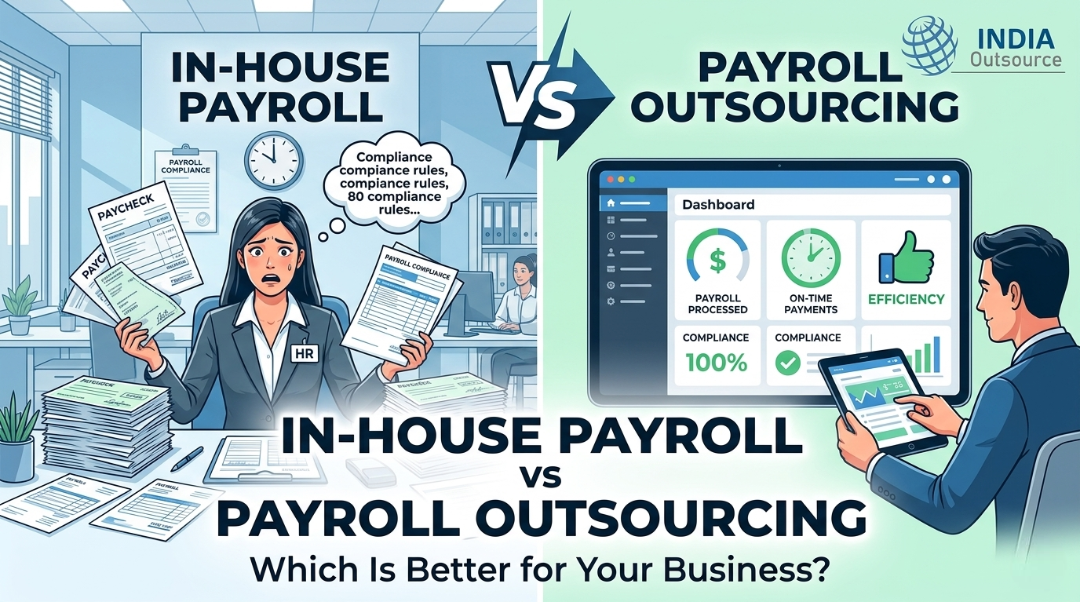
In-House Payroll vs Payroll Outsourcing Which Is Better for Your Business?

The Payroll Decision That Can Make or Break Business Efficiency

Payroll is more than just getting your staff paid on time. It is one of the foundational business activities that affect compliance, accuracy of taxes paid, employee morale, how effectively the organization exists, and management of finances. Whether you are a startup, small business (SMB) or large corporation payroll management decisions will greatly affect the success of your organization. In-House Payroll vs Payroll Outsourcing.

The biggest decision will be if you want to perform your own payroll management internally or use a third party provider for payroll services. There are benefits and drawbacks to both methods of performing payroll management, and which type of provider will best help your company achieve its goals will depend on several criteria, including: size of your company; budget; compliance requirements; future growth needs; and available company personnel resources.

Due to the increased amount of federal and state regulations affecting payroll management in today’s marketplace; payroll errors can lead to costly penalties, compliance violations large amounts criminal & civil liability and damage to company reputation, therefore being educated and aware of the differences between in-house payroll management and Payroll Outsourcing management will help you to make a knowledgeable decision as to the option that you will utilize to process payroll.

In this comprehensive guide cover a full range of information including: comparison of in-house payroll vs. outsourcing, benefits and drawbacks of both; costing of both; compliance issues; as well as which payroll processing service will be better for your business.

What Is In-House Payroll?

In-house payroll involves handling employee payroll internally, with your own employees, payroll software, and resources. In-house payroll businesses need to process payroll, withhold taxes, administer benefits, report payroll taxes, keep records and ensure compliance with labor regulations.

The payroll usually goes to the HR department, finance department or the particular payroll pros.

Key Responsibilities of In-House Payroll

  • Employee salary calculations
  • Overtime and bonus processing
  • Tax deductions and filings
  • Benefits administration
  • Payroll record maintenance
  • Compliance monitoring
  • Direct deposit management
  • Employee payroll support

What Is Payroll Outsourcing?

Payroll Outsourcing refer to a third-party payroll provider to handle payroll processes on behalf of your organization. These providers use specialized systems, compliance experts, and advanced technologies to guarantee accurate and timely payroll management.

Payroll outsourcing services often include:

  • Payroll processing
  • Tax calculations
  • Tax filing and reporting
  • Compliance management
  • Direct deposit services
  • Employee self-service portals
  • Benefits administration
  • Payroll reporting and analytics

When businesses outsource payroll services they can concentrate on their core business while the specialists deal with the administrative aspects.

In-House Payroll vs. Payroll Outsourcing : Quick Comparison

Factor In-House Payroll Payroll Outsourcing
Control High Moderate
Cost for Small Businesses Higher Lower
Compliance Responsibility Internal Team Provider
Data Access Immediate Shared Access
Scalability Limited Highly Scalable
Expertise Required High Minimal
Risk of Errors Higher Lower
Technology Investment Required Included
Time Commitment Significant Minimal
Tax Filing Management Internal Provider

Advantages of In-House Payroll

  1. Greater Control over Payroll Processes

The greatest advantage of in-house payroll is the control you have over it. Companies can directly manage payroll calculations, employee data, tax deductions and reporting.

This level of control is especially valuable for organizations with unique compensation structures or industry-specific payroll requirements.

Benefits Include:

  • Immediate access to payroll information
  • Faster adjustments
  • Custom reporting capabilities
  • Greater transparency
  1. Enhanced Data Security Management

Other organizations want to hold the financial and sensitive information of their employees inside the company.

Keeping payroll in-house allows companies to have their own security measures and limit access to sensitive payroll information.

  1. Customization Flexibility

Often, in-house payroll systems can be customized to satisfy the requirements of the organization.

Examples include:

  • Complex bonus structures
  • Industry-specific pay calculations
  • Union payroll management
  • Custom deductions
  1. Direct Employee Support

Internal payroll teams can offer instant support to employees on:

  • Pay discrepancies
  • Tax forms
  • Benefits deductions
  • Payroll inquiries

This direct communication can help to enhance the satisfaction of the employees.

Disadvantages of In-House Payroll

  1. Significant Time Commitment

Payroll management is an ongoing process.

Tasks include:

  • Tracking employee hours
  • Calculating wages
  • Managing deductions
  • Processing tax filings
  • Updating compliance regulations

This can be a serious administrative drain on business resources.

  1. Increased Risk of Payroll Errors

Errors may happen at any time in:

  • Data entry
  • Tax calculations
  • Overtime computation
  • Benefits deductions

Any errors can result in penalties, audits and employee discontent.

  1. Compliance Challenges

Employment laws and tax regulations are often constantly changing.

Employers who do their own payroll need to keep abreast of:

  • Tax laws
  • Labor regulations
  • Wage laws
  • Reporting requirements

Failure to comply can result in significant financial consequences.

  1. Technology and Software Costs

To manage payroll effectively, you need:

  • Payroll software
  • Security systems
  • Compliance tools
  • Reporting solutions

These investments can be costly in the long run.

Advantages of Payroll Outsourcing

  1. Saves Time and Resources

Businesses can save themselves from repetitive administrative tasks with payroll outsourcing.

Rather than concentrating on the management of payroll, teams can focus on:

  • Business growth
  • Customer service
  • Strategic planning
  • Revenue generation

This greater productivity can then result in improved business results.

  1. Improved Accuracy

Some of the professional payroll companies also have high-tech systems and specialists to minimize the error.

Benefits include:

  • Accurate calculations
  • Automated tax deductions
  • Error prevention mechanisms
  • Reliable reporting

This reduces risks associated with payroll.

  1. Compliance Expertise

Regulatory compliance is one of the most beneficial aspects of outsourcing payroll.

Payroll providers keep an eye on changes to:

  • Tax legislation
  • Employment laws
  • Government reporting requirements

This helps to minimise compliance risk dramatically.

  1. Cost Efficiency

Numerous companies find the expense of outsourcing payroll is lower than having their own payroll department.

Potential savings include:

  • Reduced staffing costs
  • Lower software expenses
  • Less training investment
  • Reduced compliance risks
  1. Scalability for Business Growth

The larger an organization becomes, the more complex the payroll becomes.

Payroll Outsourcing providers can easily handle:

  • New employees
  • Multiple locations
  • International payroll
  • Expanded benefits programs

Without necessitating significant investments within the company.

  1. Access to Advanced Technology

Top payroll software providers provide:

  • Cloud-based platforms
  • Employee self-service portals
  • Automated reporting
  • Mobile access
  • Data analytics

Companies get enterprise level tech without purchasing costly systems.

Disadvantages of Payroll Outsourcing

  1. Reduced Direct Control

Companies need to use outsourcing firms to get their payroll done.

Others may not be okay giving up control.

  1. Ongoing Service Fees

While outsourcing often reduces costs overall, businesses must pay recurring service fees.

The price may change depending on the following factors:

  • Employee count
  • Payroll frequency
  • Additional services
  1. Dependence on External Providers

Organizations become dependent on the provider’s:

  • Technology infrastructure
  • Customer support
  • Service reliability

It is therefore essential to choose a reputable payroll partner.

  1. Data Sharing Considerations

When you outsource payroll services, you’re dealing with sensitive information about your employees that you must share with an outside firm.

Businesses should verify:

  • Data encryption standards
  • Security certifications
  • Privacy compliance policies

Prior to selecting a provider.

Cost Comparison: In-House Payroll vs. Payroll Outsourcing

In-House Payroll Costs

Typical expenses include:

  • Payroll software licenses
  • Employee salaries
  • Staff training
  • Compliance updates
  • IT support
  • Security infrastructure

As the company expands, these expenses can mount up rapidly.

Payroll Outsourcing Costs

Payroll providers usually charge:

  • Monthly service fees
  • Per-employee fees
  • Additional service charges

However, companies may still find the flexibility in cutting down administrative burdens and compliance dangers.

Which Businesses Benefit Most from In-House Payroll?

In-house payroll may be ideal for:

Large Enterprises

For organizations that have their own payroll department, it may be beneficial to have an internal control.

Companies with Unique Payroll Structures

In-house might be the better option for businesses with highly individual payroll needs.

Organizations with Strong HR and Finance Teams

Companies already employing payroll specialists can leverage existing expertise.

Which Businesses Benefit Most from Payroll Outsourcing?

Payroll Outsourcing is often ideal for:

Startups

Startups can steer clear of the hassle of payroll and concentrate on their expansion.

Small and Medium-Sized Businesses

SMBs may not have the in-house expertise to manage payroll, and may rely on professional help.

Rapidly Growing Companies

Payroll Outsourcing provides flexibility and scalability during expansion.

Multi-Location Businesses

Payroll providers ease payroll management in different areas.

Key Factors to Consider Before Making Your Decision

In comparing in-house and Payroll Outsourcing, keep in mind:

Business Size

In larger companies, an in-house payroll department might be warranted.

Budget

Determine Direct/Indirect payroll costs.

Compliance Requirements

Industries with complex regulations may benefit from outsourcing.

Growth Plans

Payroll software is a boon during expansion.

Internal Expertise

Evaluate your team’s payroll expertise.

Technology Requirements

Think about software, security, automation and reporting requirements.

Conclusion: In-House Payroll vs. Payroll Outsourcing

Choosing between in-house payroll and Payroll Outsourcing is not as simple as saying it is the right option or wrong option; instead you need to evaluate which will be the best option based on your organization’s unique situation and requirements, available resources, and growth plans.

If a company wants full control and flexibility over the payroll process (because it can do the job better than anyone else, has employees that are experts in their jobs, and/or has employees that are skilled and knowledgeable about payroll), the in-house option may be the best choice.

However, many small to medium businesses are taking advantage of the efficiencies, lower compliance risks, accuracy, reduced amount of time spent on administrative work, and enhanced technology available through Payroll Outsourcing.

The increasing complexity of payroll laws combined with time savings and the desire for company’s leaders to grow their business strategically results in a growing reliance on outsourcing to produce these benefits.

Ready to Simplify Your Payroll Process?

Contact Us Today.

FAQs

1. What is the difference between in-house payroll and Payroll Outsourcing?

An in-house payroll is handled by your HR or finance team while an Payroll Outsourcing is performed by an payroll services provider. The payroll services provider will manage all the payroll processing, pay tax forms and ensure compliance.

2. Is Payroll Outsourcing cheaper than in-house payroll?

Many small companies or mid-sized businesses use an Payroll Outsourcing provider because it can provide them with the most cost-effective solution since they will not need to spend money on hiring new payroll staff or buying payroll software, or paying for training or maintaining compliance with various laws.

3. What are the benefits of Payroll Outsourcing?

Payroll Outsourcing provides businesses with improved payroll accuracy, compliance assistance, time-saving, reduction in the administration workload, access to new technology and scalability as business grows.

4. What are the disadvantages of Payroll Outsourcing?

The primary disadvantages of using an Payroll Outsourcing processor are lack of direct control over payroll processing, on-going fees paid to processor, dependency on third-party processor reliability as well as the risk of sharing confidential employee information with a third party.

5. Is in-house payroll better for large businesses?

Larger organizations that have their own dedicated payroll teams will generally have a larger control over their payroll processing and additional customization options to meet their more complex payroll requirements.

6. How does payroll outsourcing help with compliance?

Payroll firms assist firms in staying current with the constantly changing tax legislation, labor laws, and reporting obligations to assist them in avoiding penalties, errors, and compliance issues.

7. Which businesses should Payroll Outsourcing?

Small businesses, startups, and other types of businesses can frequently find it more advantageous to outsource their payroll due to its degree of adaptability and efficiency.

8. What factors should businesses consider when choosing a payroll solution?

Many factors, including company size, budget/finance, compliance, anticipated growth projections, payroll complexity, internal resources, technology requirements, etc., will influence the decision to outsource.

9. Does Payroll Outsourcing reduce payroll errors?

Yes. Automated systems and payroll experts help professional payroll service providers avoid errors in calculation, tax errors, and reporting inaccuracies.

10. Can Payroll Outsourcing support business growth?

Yes. Payroll Outsourcing services can easily scale with your business by handling additional employees, multiple locations, expanded benefits programs, and international payroll needs.